

If you’ve ever noticed that your migraines seem to worsen right before your period, during perimenopause, or after menopause, you’re not imagining it. For many women, migraines are deeply connected to changing hormone levels—particularly estrogen. In fact, nearly 60% of women with migraines report that their headaches are tied to their menstrual cycle.
But why?
The answer lies in a fascinating interaction between your brain, your nerves, your blood vessels, and a tiny inflammatory protein called CGRP. Let’s walk through what actually happens during a migraine.
It Starts in the Brain
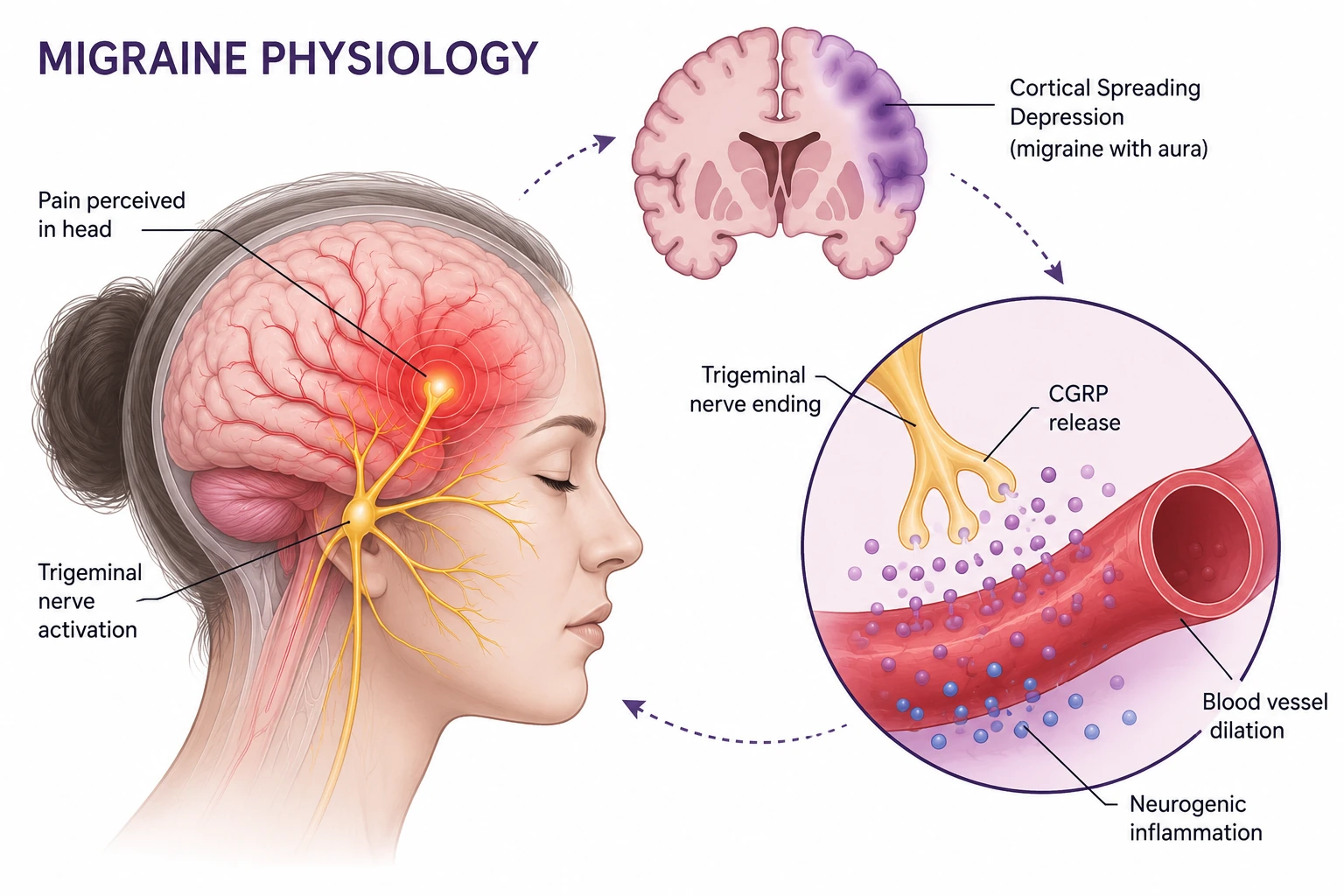
For some people—particularly those who experience migraine with aura—the first event begins inside the brain itself. A wave of electrical activity spreads slowly across the surface of the brain, followed by a temporary decrease in brain activity.
Scientists call this cortical spreading depression. This wave can temporarily disrupt vision, speech, sensation, or balance before the headache even begins. It’s responsible for the flashing lights, zig-zag lines, numbness, or tingling that some migraine sufferers experience. Not everyone has aura, but this event can trigger the next step in the migraine cascade.
The Trigeminal Nerve Gets Activated
The trigeminal nerve is the largest sensory nerve in the face. Think of it as the brain’s alarm system for pain around the head and face. When this nerve becomes activated, it begins releasing inflammatory signaling molecules—including one that has become famous in migraine research: Calcitonin Gene-Related Peptide (CGRP).
CGRP: The Molecule That Changed Migraine Medicine
CGRP is a small protein that has enormous effects. When released from the trigeminal nerve, it causes blood vessels surrounding the brain to dilate and become more permeable. It also amplifies pain signals traveling to the brain. The result?
The throbbing, pounding headache that many migraine sufferers know all too well. CGRP also recruits inflammatory cells around the nerves, creating what’s called neurogenic inflammation—a sterile inflammatory response that further sensitizes the nervous system. The more CGRP released, the more sensitive the brain becomes to light, sound, smells, movement, and even normal touch. This is one reason migraine is now considered a neurologic disorder, not simply a vascular headache as physicians once believed.
So Where Does Estrogen Fit In?
This is where hormones become incredibly important. Estrogen normally has a calming effect on the trigeminal pain pathways. It appears to reduce CGRP production, decrease inflammation, stabilize nerve signaling, and help regulate serotonin pathways involved in pain control.
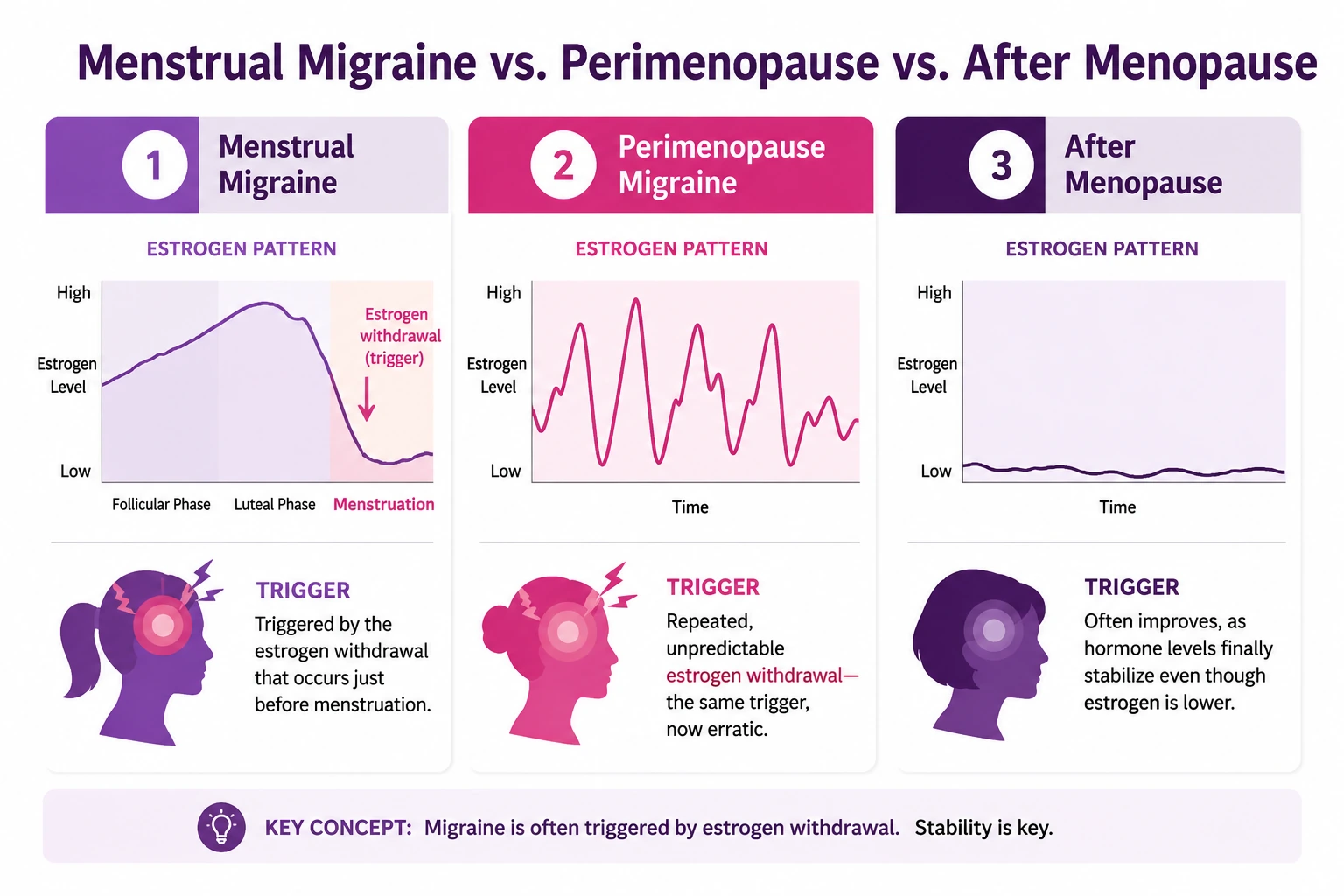
When estrogen levels remain relatively stable, many women experience fewer migraines. The problem occurs when estrogen falls rapidly.
Why Perimenopause Can Be So Difficult
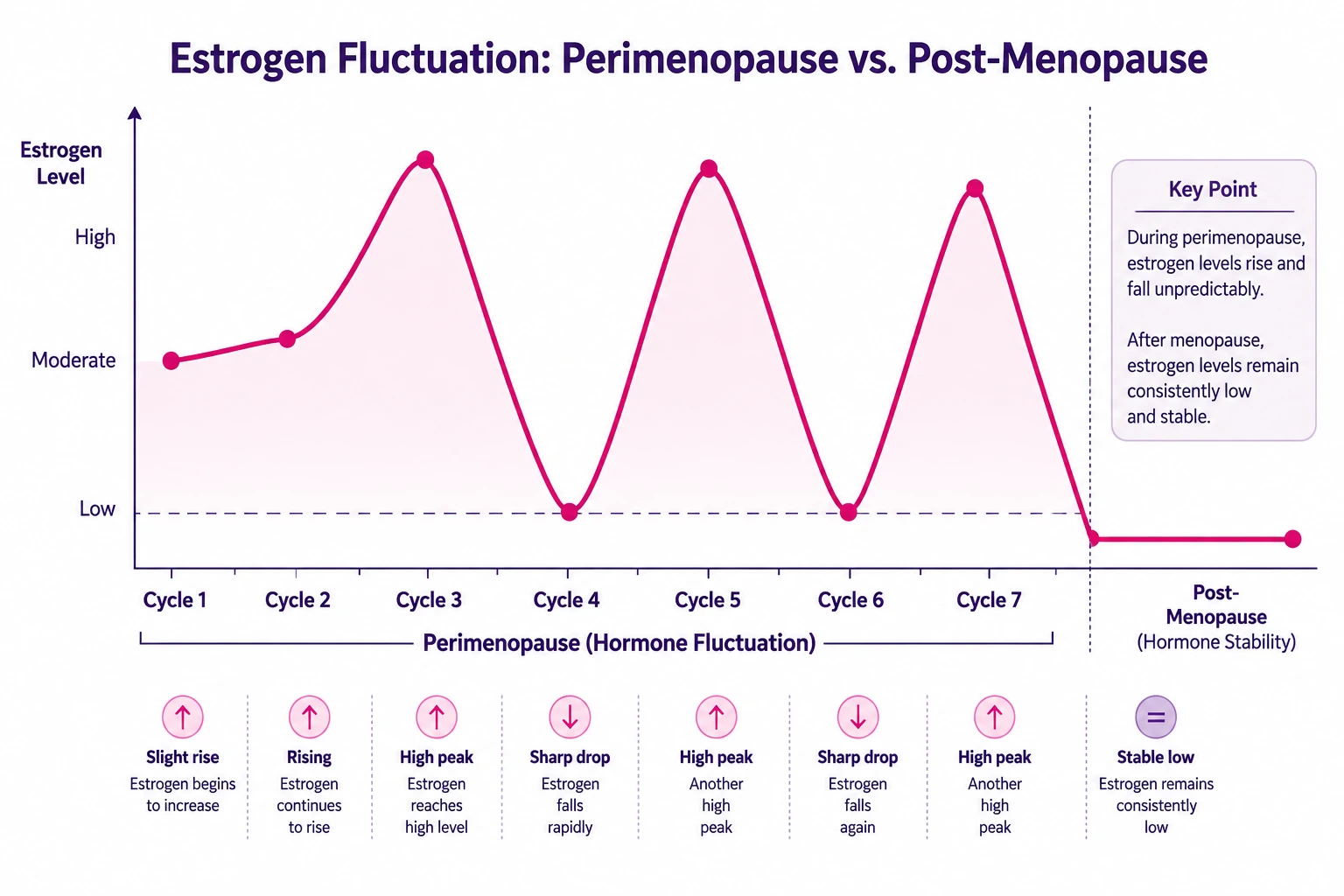
Perimenopause is characterized by dramatic hormonal swings. Estrogen doesn’t simply decline—it fluctuates unpredictably. One month levels may be extremely high. The next month they may crash. These rapid drops appear to remove estrogen’s protective effects on the trigeminal system.
As a result more CGRP is released, the trigeminal nerve becomes more excitable, the brain becomes more sensitive to pain and migraine attacks become more frequent or more severe. Many women who never had migraines before notice they first appear during perimenopause. Others who previously experienced only occasional headaches suddenly develop several migraines each month.
Why Many Women Improve After Menopause
Interestingly, many women notice their migraines improve after natural menopause. Why?
Because although estrogen levels are lower, they also become much more stable. It’s often the fluctuation, rather than the absolute estrogen level, that triggers migraine attacks. Of course, every woman is different. Some continue to experience migraines after menopause, particularly if other triggers remain.
How Hormone Therapy May Help
For women whose migraines worsen because of estrogen fluctuations, menopausal hormone therapy can sometimes reduce attacks by providing steadier estrogen levels.
However, the type of estrogen matters.
Transdermal estrogen (patches, gels, sprays, or injections) generally produces more stable hormone levels than oral estrogen and avoids many of the hormone peaks and valleys that can trigger migraines. Women with migraine without aura often tolerate hormone therapy well when appropriately prescribed. Migraine with aura requires a more individualized discussion because aura is independently associated with a small increase in stroke risk. Hormone therapy is not automatically contraindicated, but careful assessment of cardiovascular risk factors and use of the lowest effective transdermal estrogen dose is generally preferred.
New Treatments Target the Migraine Pathway Directly
One of the biggest breakthroughs in migraine medicine has been the development of medications that block CGRP. These include: CGRP monoclonal antibodies (preventive medications) and CGRP receptor antagonists. Rather than simply treating pain after it occurs, these medications interrupt the migraine process itself by preventing CGRP from activating the trigeminal pain pathway. For many patients, they’ve been life-changing.
The Bottom Line
Migraines are far more than “bad headaches.”
They are complex neurological events involving the brain, the trigeminal nerve, inflammatory signaling molecules like CGRP, and—in many women—the powerful influence of estrogen.
Understanding this biology helps explain why migraines often worsen during perimenopause, improve after menopause for some women, and why both hormone therapy and newer CGRP-targeted medications can play an important role in treatment.
The goal isn’t simply to mask pain. It’s to understand the underlying mechanisms driving it—and to choose therapies that target those mechanisms while taking into account each woman’s symptoms, migraine type, cardiovascular risk, and stage of reproductive life.
References:
British Menopause Society. Migraine and HRT. Women’s Health Concern/British Menopause Society; November 2022.
MacGregor EA. Migraine, menopause and hormone replacement therapy. Post Reprod Health. 2018;24(1):11-18. doi:10.1177/2053369117741172
Nappi RE, Cagnacci A. Hormonal management of migraine at menopause. Climacteric. 2022;25(4):338-345. doi:10.1080/13697137.2022.2050203
Pavlović JM, Allshouse AA, Santoro NF, et al. Sex hormones in women with and without migraine: evidence of migraine-specific hormone profiles. Neurology. 2016;87(1):49-56. doi:10.1212/WNL.0000000000002802
Sacco S, Merki-Feld GS, Ægidius KL, et al. European Headache Federation (EHF) and European Society of Contraception and Reproductive Health (ESC) consensus statement on hormonal therapies and migraine. J Headache Pain. 2017;18:108. doi:10.1186/s10194-017-0815-1
The Menopause Society. The 2022 Hormone Therapy Position Statement of The North American Menopause Society. Menopause. 2022;29(7):767-794. doi:10.1097/GME.0000000000002028
Vetvik KG, MacGregor EA. Sex differences in the epidemiology, clinical features, and pathophysiology of migraine. Lancet Neurol. 2017;16(1):76-87. doi:10.1016/S1474-4422(16)30293-9