
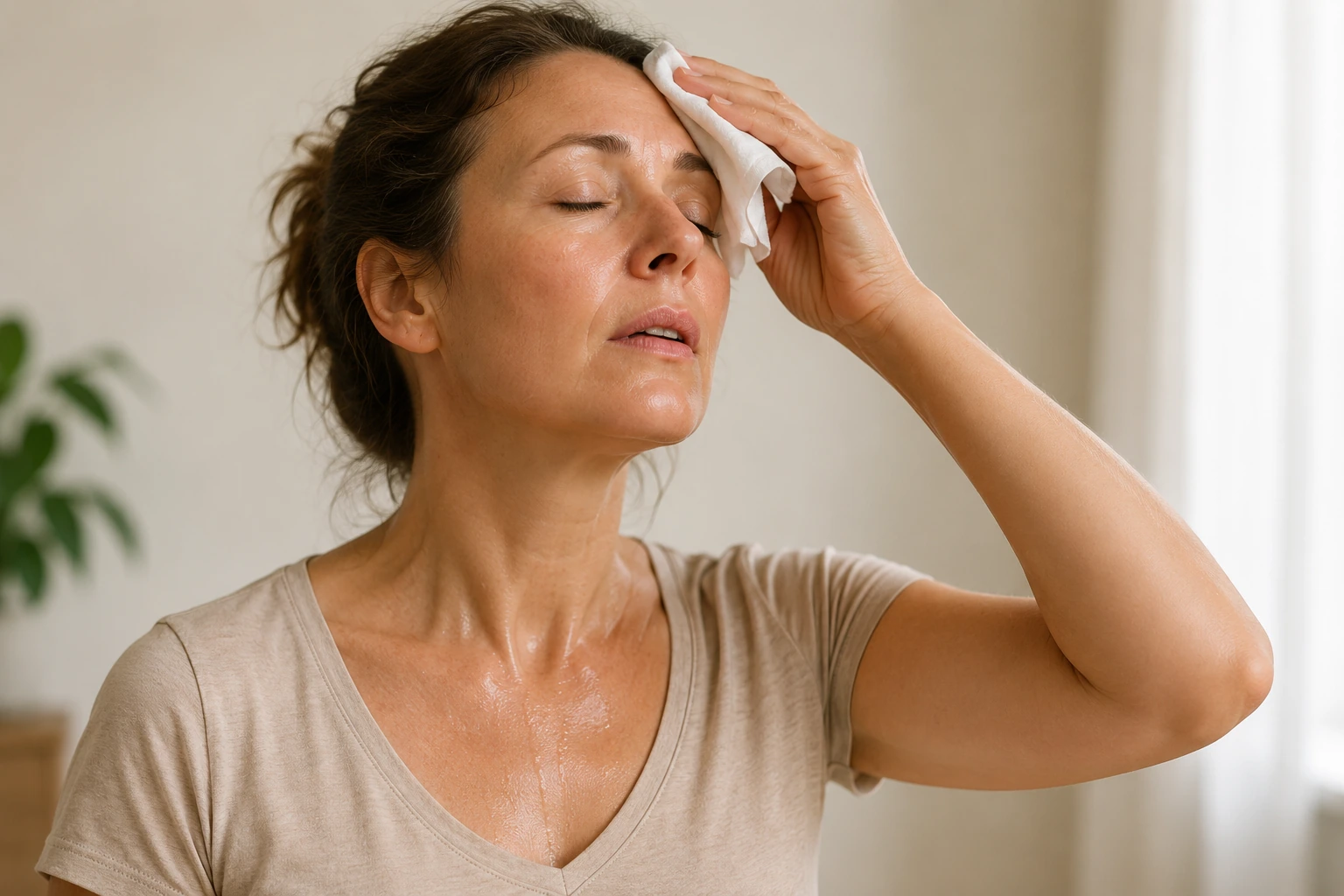
Sweating more during midlife is extremely common, but it’s not always due to hot flashes alone. Several physiologic changes occur during the perimenopausal/menopausal transition that can increase sweating both during the day and at night. The most common is declining estrogen, which disrupts the body’s thermostat.
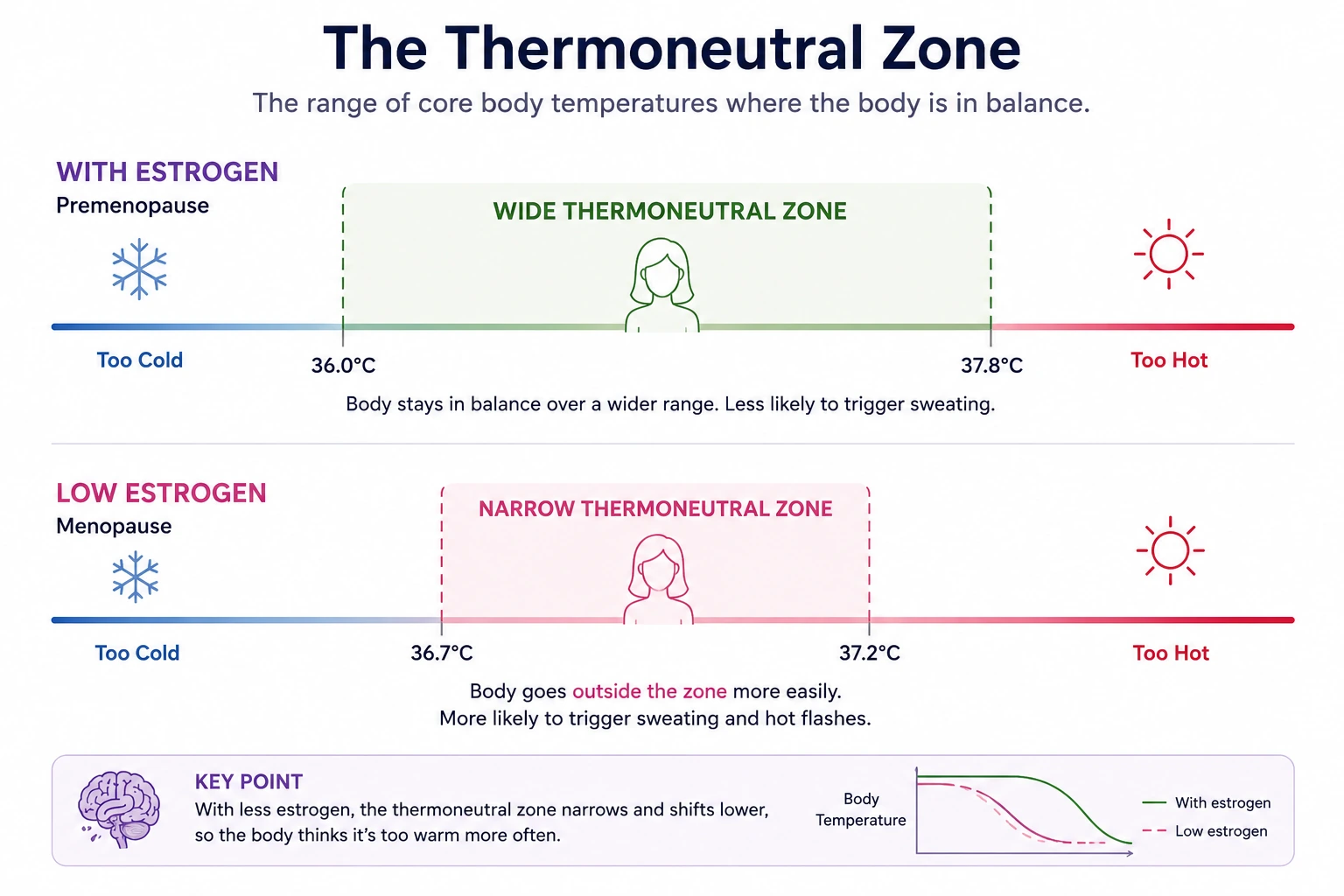
As estrogen levels fluctuate and eventually decline during perimenopause and menopause, the hypothalamus—the brain’s temperature regulation center—becomes more sensitive to even tiny changes in core body temperature. Normally, your body has a broad “thermoneutral zone,” meaning your temperature can vary slightly before cooling mechanisms activate. During menopause, that zone becomes much narrower. As a result, a very small rise in body temperature can trigger sweating. blood vessels dilation, sweat glands activating more rapidly than before and for some women sudden heat followed by profuse sweating. This is why hot flashes often begin with intense warmth followed by heavy perspiration. Also, this is why rather than requiring a significant rise in core temperature before sweating begins, the body may initiate sweating at a lower threshold. In other words, the “set point” for activating sweat glands shifts. For example, walking outside on an 80°F day may now produce noticeable sweating, mild household chores may leave clothing damp and exercise may trigger earlier and heavier sweating than before menopause. This reflects altered thermoregulation, even if there is no sudden flushing episode.
Scientists used to believe that hot flashes were simply caused by low estrogen. The reality Is these symptoms are actually generated by specific neurons in the hypothalamus that become overactive when estrogen declines. A specialized group of hypothalamic neurons called KNDy neurons are central to menopausal hot flashes. “KNDy” refers to the three signaling molecules these neurons produce: Kisspeptin, Neurokinin B and Dynorphin. Kisspeptin stimulates release of Gonadotropin-releasing hormone, helping regulate reproductive hormones. Neurokinin B acts as an “accelerator,” exciting neighboring KNDy neurons and amplifying their activity. Dynorphin acts as the “brake,” helping dampen the neuronal signal. In healthy premenopausal women, these three signals remain in balance. Estrogen normally exerts negative feedback on KNDy neurons. It suppresses the genes that encode kisspeptin and neurokinin B and helps keep this network from becoming overactive. As estrogen falls during perimenopause and menopause: estrogen’s inhibitory effect weakens, KNDy neurons enlarge and become more active, Neurokinin B production increases and NK3 receptors are stimulated more frequently. When neurokinin B activates NK3 receptors, the brain mistakenly concludes that the body is too warm—even if core temperature has barely changed.
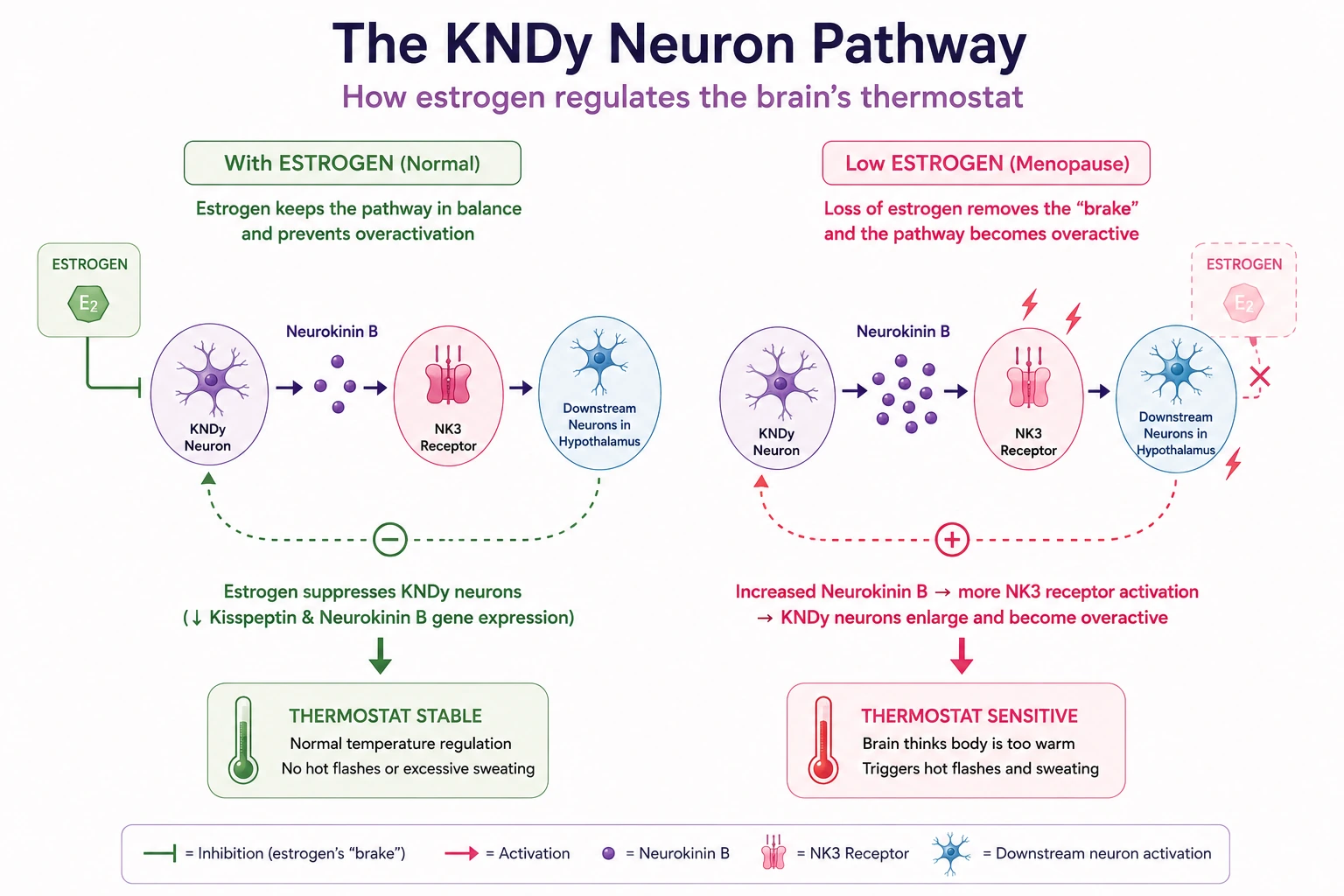
The discovery of the neurokinin B (NKB) pathway has been one of the biggest advances in understanding why women experience hot flashes and excessive sweating during menopause. It has also led to the development of the first nonhormonal medications specifically designed to treat vasomotor symptoms, Fezolinetant and Elinzanetant.
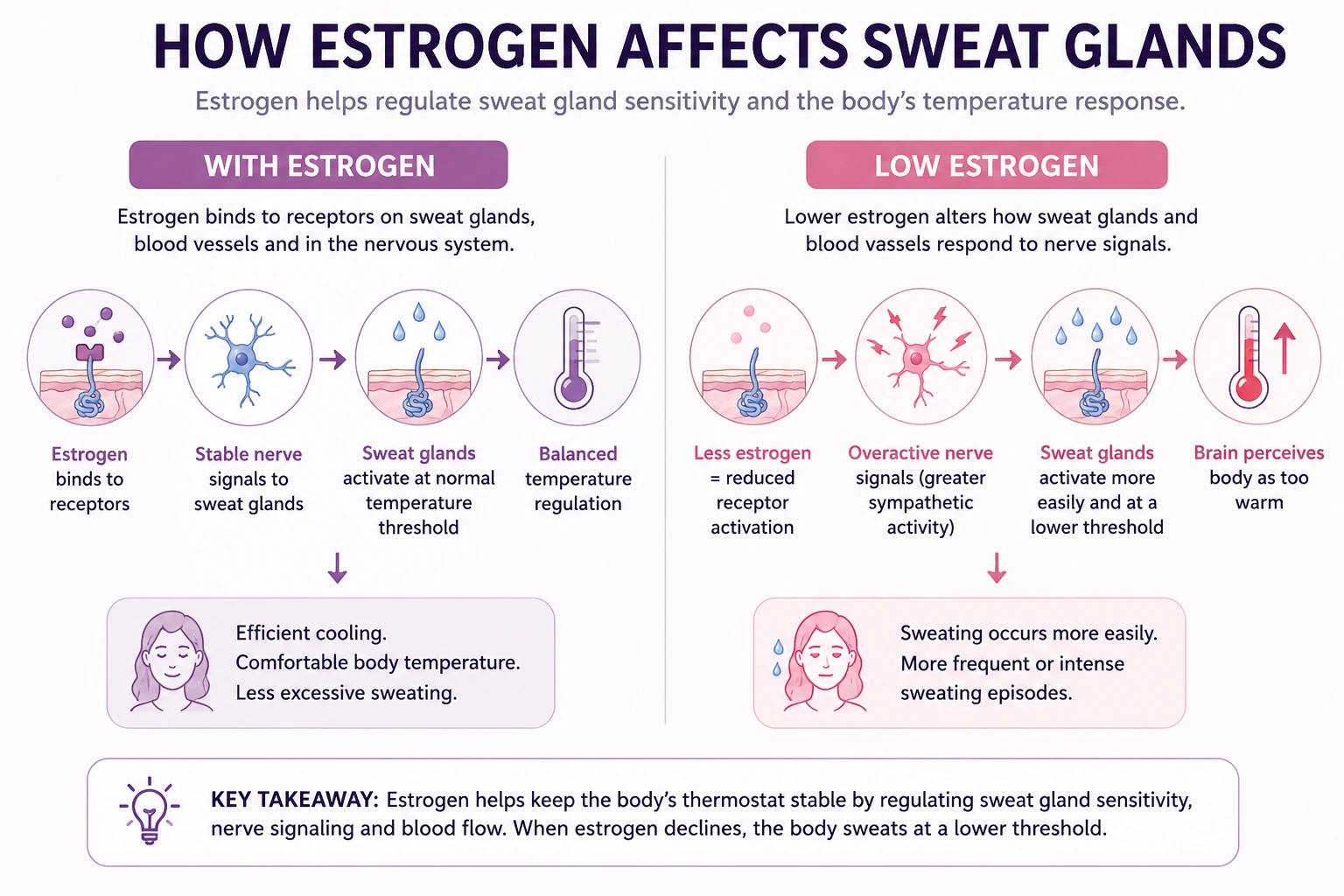
In addition, estrogen directly affects sweat glands. There are estrogen receptors present on eccrine sweat glands (responsible for cooling), skin blood vessels and in the nervous system. Lower estrogen appears to alter how these glands respond to nerve signals, making sweating occur more easily.
Menopause is also associated with increased sympathetic (”fight or flight”) nervous system activity. This means women may have faster activation of sweat glands , greater skin blood flow and stronger sweating responses. This heightened autonomic activity contributes to both hot flashes and spontaneous sweating.
Many women wake drenched because body temperature naturally fluctuates during sleep and even a small temperature change can trigger a sweating episode In midlife, weight gain is more common and adipose (fat) tissue acts as insulation. Women who gain weight during menopause often retain heat more easily , need to sweat more to cool themselves, and experience more severe vasomotor symptoms (hot flashes). Weight loss has been associated with reductions in hot flash frequency and severity in some studies.
In mid life, women tend to lose lean muscle and this changes metabolism altering health production and heat dissipation. As a result, during exercise, many women notice, that they overheat sooner, they sweat earlier and that recovery takes longer.
For women with bothersome vasomotor symptoms and no contraindications, menopause hormone therapy (MHT) is considered the most effective treatment. By replacing estrogen, MHT helps: widen the thermoneutral zone, stabilize hypothalamic temperature regulation, reduce activation of sweat glands, decrease daytime sweating and night sweats, and improve sleep quality. Non hormonal treatment options include Fezolinetant and Elinzanetant, drugs that blocks the NKB pathway, oxybutynin which is a drug that is originally used as an overactive bladder medication but can be used off label to help reduce hot flashes and sweating. SSRIs/SNRIs are also used to help with hot flashes. Topical medications like prescription aluminum chloride, topical gylcopyrronium, and Botox can help with excessive sweating. Finally, lifestyle measures like cooling mattress pads, fans, moisture-wicking sleepwear, weight loss, limiting alcohol, and spicy foods can help.
Persistent or severe sweating warrants evaluation if accompanied by symptoms such as fever, weight loss, enlarged lymph nodes, palpitations, diarrhea, or new medications. Other causes include: hyperthyroidism, type 2 Diabetes (including hypoglycemia), Medication side effects (such as antidepressants or corticosteroids), infections, Sleep apnea, and certain cancers (less common but important if there are concerning associated symptoms).
A common misconception is that menopause makes women “run hotter.” In reality, average core body temperature often decreases slightly after menopause. The problem is not excess heat production—it is that the brain’s thermostat becomes overly sensitive, triggering sweating and heat-loss responses inappropriately. This altered temperature regulation is what drives hot flashes and excessive sweating during midlife.
References
American College of Obstetricians and Gynecologists. Management of Menopausal Symptoms. ACOG Practice Bulletin. Washington, DC: American College of Obstetricians and Gynecologists; 2022.
Charkoudian N, Stachenfeld NS. Sex hormone effects on autonomic mechanisms of thermoregulation in humans. Auton Neurosci. 2016;196:75-80.
Fraser GL, Lederman S, Waldbaum A, et al. Efficacy of fezolinetant for moderate-to-severe vasomotor symptoms associated with menopause (SKYLIGHT 1): a phase 3 randomized controlled study. Lancet. 2023;401(10382):1091-1102.
Freedman RR. Hot flashes: behavioral treatments, mechanisms, and relation to sleep. Am J Med. 2005;118(12 Suppl 2):124-130.
Freedman RR. Menopausal hot flashes: mechanisms, endocrinology, treatment. J Steroid Biochem Mol Biol. 2014;142:115-120.
Freedman RR. Physiology of menopausal hot flashes. Am J Hum Biol. 2001;13(4):453-464.
Lederman S, Ottery FD, Cano A, et al. Fezolinetant for treatment of moderate-to-severe vasomotor symptoms associated with menopause (SKYLIGHT 2): a phase 3 randomized controlled trial. Lancet. 2023;402:641-651.
Mittelman-Smith MA, Williams H, Krajewski-Hall SJ, et al. Role for kisspeptin/neurokinin B/dynorphin neurons in menopausal hot flashes. Menopause. 2012;19(6):650-657.
Padilla SL, Perez JG, Ben-Hamo M, et al. Kisspeptin neurons link reproductive hormone signaling with body temperature regulation. Proc Natl Acad Sci U S A. 2018;115(11):2769-2774.
Rance NE, Dacks PA, Mittelman-Smith MA, Romanovsky AA, Krajewski-Hall SJ. Modulation of body temperature and luteinizing hormone secretion by hypothalamic KNDy neurons. Endocrinology. 2013;154(9):3203-3211.
The Menopause Society. The 2022 Hormone Therapy Position Statement of The Menopause Society. Menopause. 2022;29(7):767-794.
The Menopause Society. The 2023 Nonhormone Therapy Position Statement of The Menopause Society. Menopause. 2023;30(6):573-590.
Thurston RC, Joffe H. Vasomotor symptoms and menopause: findings from the Study of Women’s Health Across the Nation. Obstet Gynecol Clin North Am. 2011;38(3):489-501.