
Women expect hot flashes, night sweats and changes in their periods during perimenopause. What many don’t expect is how much their skin can change. Suddenly the moisturizer you have used for years doesn’t seem to work anymore. Your skin feels drier or more sensitive. Fine lines seem deeper. Your face may not feel as firm. You might develop acne along your jawline while simultaneously dealing with dry skin. Your scalp hair may become thinner, while a few coarse hairs mysteriously appear on your chin. These changes are extremely common. The 2026 recommendations from the International Menopause Society estimate that 60% to 70% of women report changes in their skin around menopause. The most commonly described problems include dryness, itching, thinning, increased sensitivity, loss of firmness and elasticity, wrinkles, pigmentation changes and changes in hair. There is a biological reason for all of this that doesn’t get discussed nearly enough: your skin is a hormone-sensitive organ.
Your skin has estrogen receptors
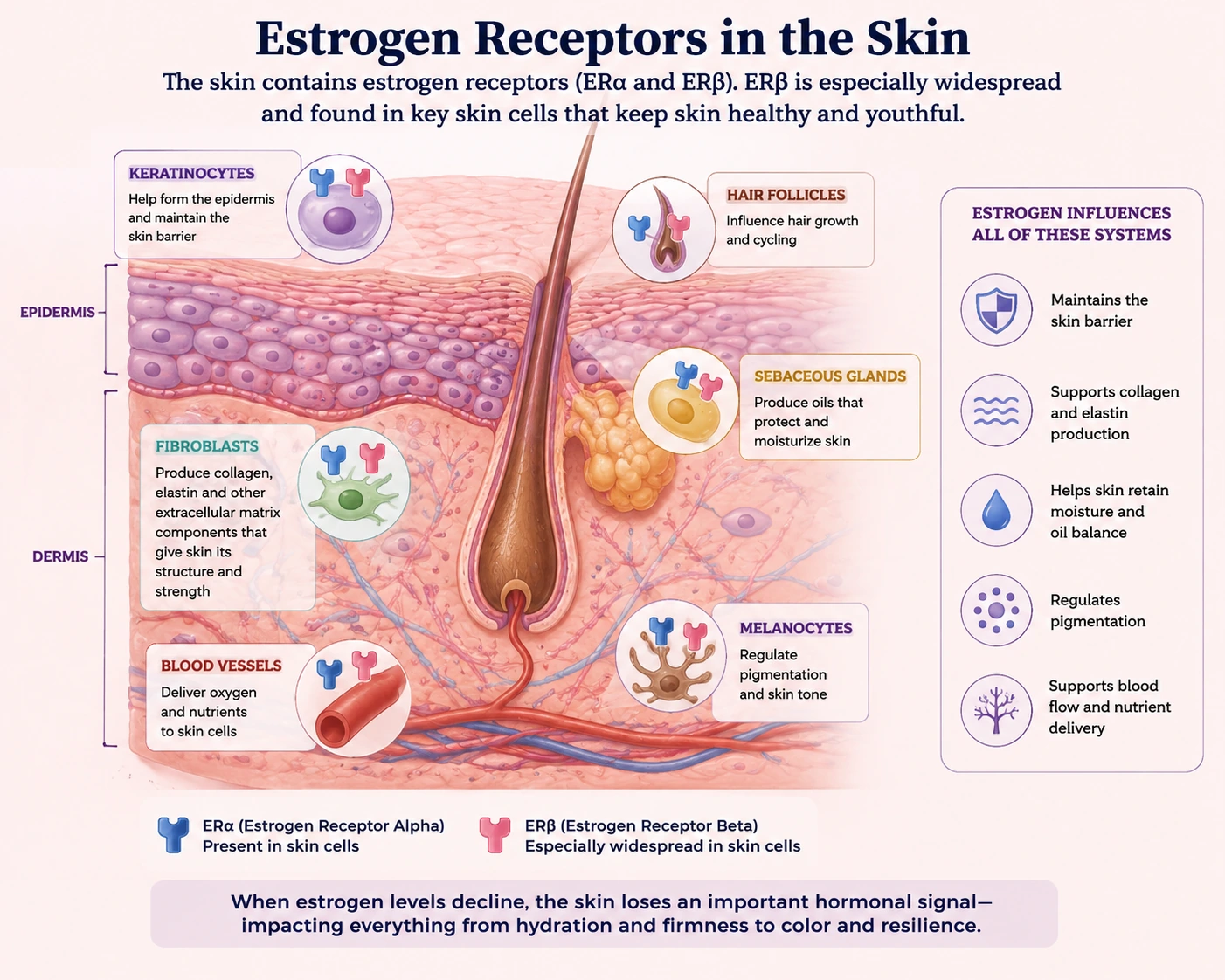
We tend to think of estrogen in terms of periods, fertility and hot flashes, but estrogen has effects throughout the body. The skin contains estrogen receptors, including estrogen receptor alpha (ERα) and estrogen receptor beta (ERβ). ERβ is particularly widespread and has been identified in dermal fibroblasts, melanocytes, sebaceous glands, hair follicles and keratinocytes. That matters because these cells control many of the things we associate with healthy-looking skin. Keratinocytes help form the epidermis and maintain the skin barrier. Fibroblasts live deeper in the dermis and produce collagen, elastin and other components of the extracellular matrix that give skin its structure. Sebaceous glands contribute oils that help protect the skin. Melanocytes regulate pigmentation. Blood vessels provide oxygen and nutrients to the tissue. Estrogen influences all of these systems. So when estradiol begins fluctuating during perimenopause and then falls dramatically after menopause, the effects aren’t confined to the ovaries. The skin loses an important hormonal signal it has been receiving for decades. This is why I tell my patients that when estrogen starts declining, your skin may show you exactly how it feels about it.
The biggest change is what happens underneath the surface
The most important menopausal skin changes are actually happening in the dermis, the deeper layer of the skin that you can’t see. The dermis contains fibroblasts, collagen, elastin, blood vessels and a gel-like extracellular matrix that contains water-binding molecules such as hyaluronic acid and other glycosaminoglycans. Think of collagen as the scaffolding of your skin. Type I collagen provides much of its strength, while type III collagen helps support the tissue architecture. Elastin allows skin to stretch and recoil. Hyaluronic acid and other glycosaminoglycans bind water and help keep the tissue hydrated and plump. Estrogen helps support fibroblast activity and the production and maintenance of these structural components.
When estrogen falls, that balance shifts. Collagen production decreases. Collagen breakdown continues. The dermis becomes thinner. Water-binding capacity declines. Sebaceous and sweat gland activity also decreases. Microcirculation changes. Over time, the skin becomes thinner, drier, less elastic and more fragile. And the magnitude of the collagen change is larger than most women realize.
We may lose about 30% of skin collagen in the first five years after menopause
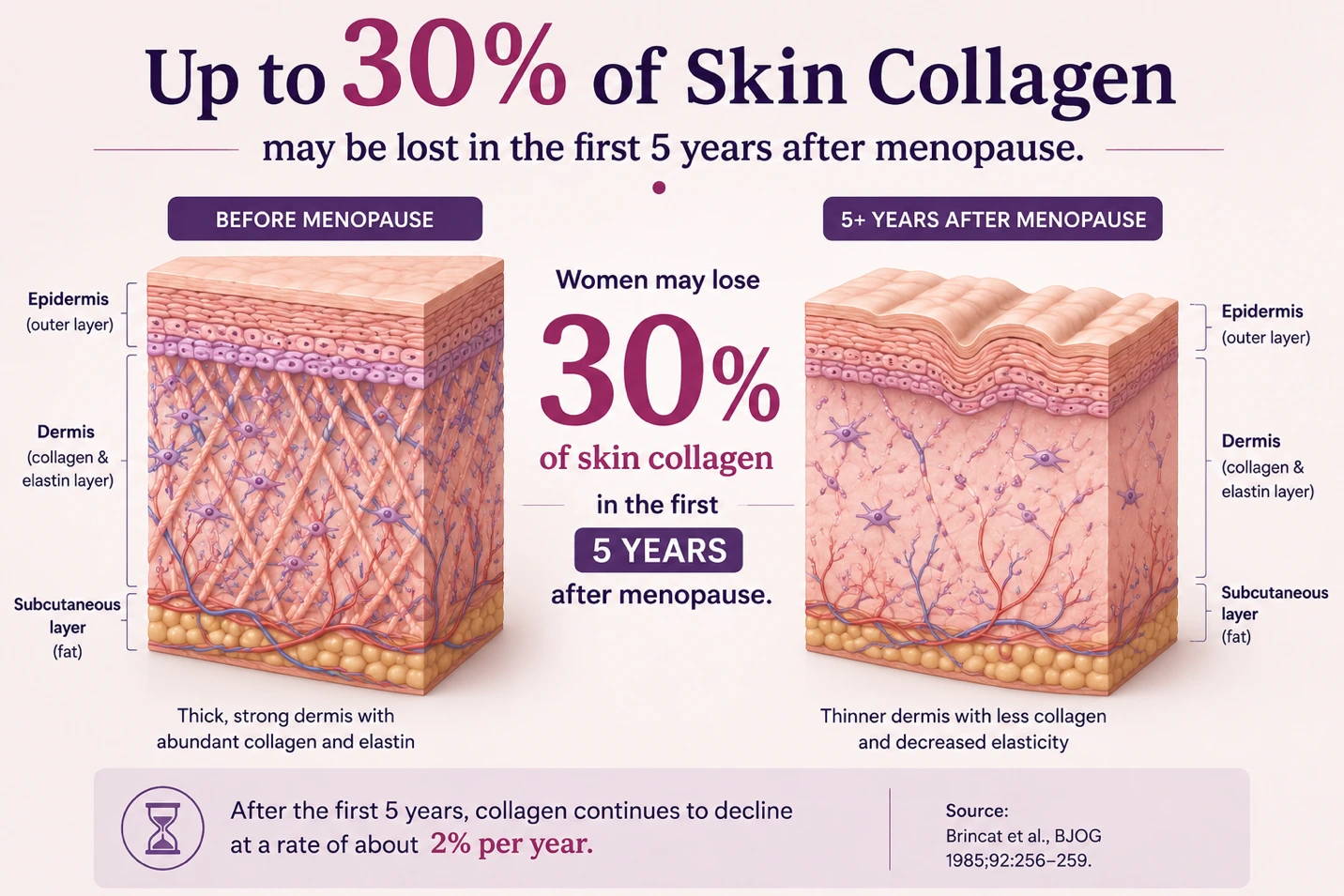
This is one of the most striking statistics in menopause medicine. Classic work by Brincat and colleagues found that skin collagen and skin thickness decline after menopause and that the decline correlated strongly with the number of years a woman had been menopausal. Interestingly, in untreated women, collagen loss correlated more closely with menopausal age than chronological age. Subsequent research has estimated that women may lose as much as 30% of types I and III skin collagen during the first five years after menopause, followed by an average decline of approximately 2% per year afterward. Skin thickness has been estimated to decrease by roughly 1% per postmenopausal year. That helps explain something I hear frequently from women in their late 40s and 50s: “I feel like my face changed overnight.” It didn’t literally happen overnight. But menopause can accelerate a structural process that was already occurring with age. This loss of collagen contributes to thinner skin, fine lines, deeper wrinkles, loss of firmness, sagging and easier bruising. It can also make pores and underlying blood vessels appear more prominent simply because there is less dense tissue surrounding them.
Why does menopausal skin get so dry?
Dryness is another major complaint, and there is more going on than simply producing less oil.
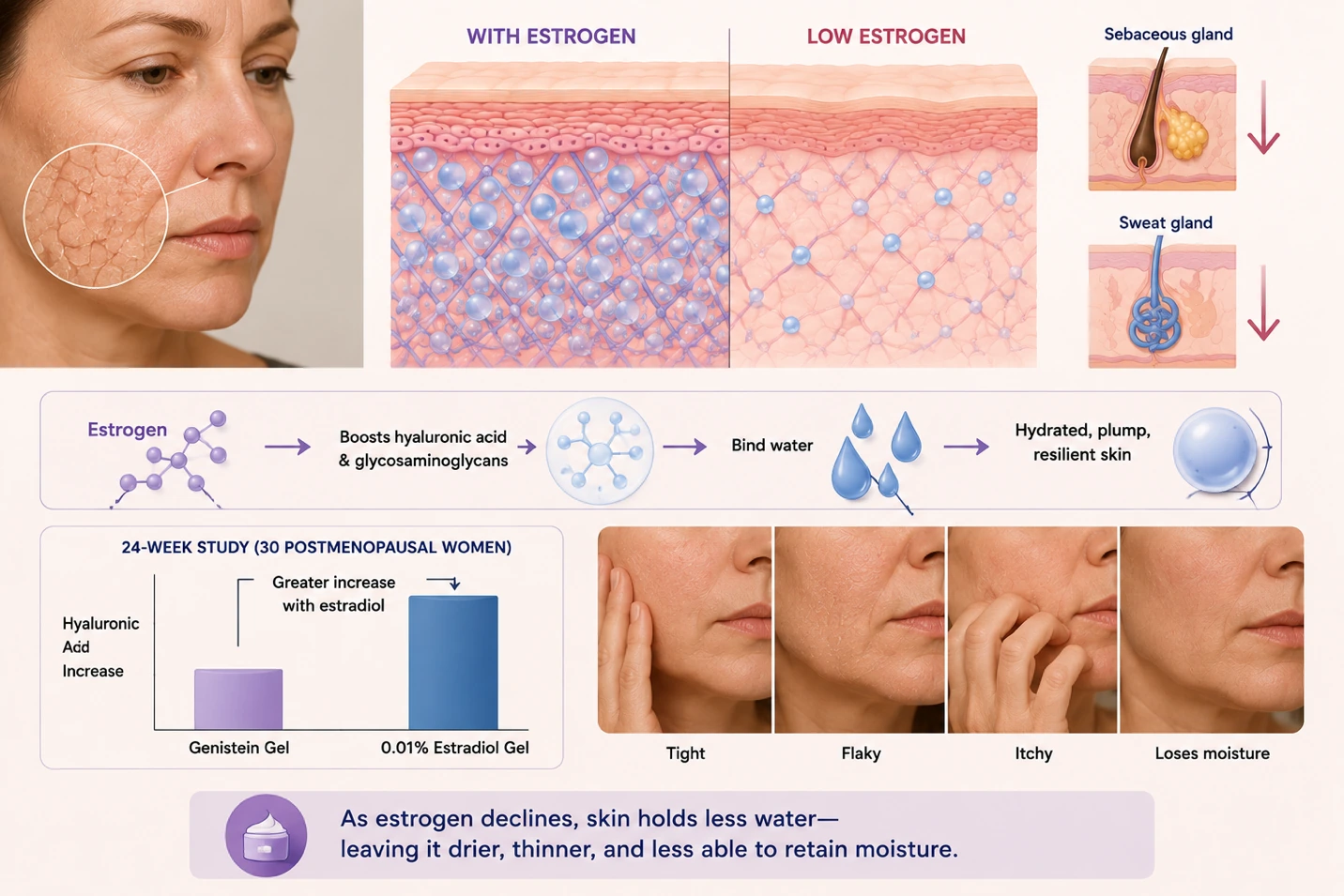
Estrogen influences the skin’s extracellular matrix, including hyaluronic acid and other glycosaminoglycans. These molecules have an extraordinary ability to bind water. They help maintain hydration and contribute to the plumpness and resilience of the skin. As estrogen declines, the composition of that extracellular matrix changes. Sebaceous and sweat gland activity also decreases after menopause, further contributing to dry skin. We actually have human biopsy data showing how closely estrogen is connected to hyaluronic acid. In a randomized, double-blind study of 30 postmenopausal women, researchers treated facial skin for 24 weeks with either 0.01% estradiol gel or a genistein gel. Skin biopsies showed that hyaluronic acid concentrations increased with both treatments, but the increase was greater with estradiol. That is an important piece of physiology because it helps explain why estrogen-deficient skin can feel less hydrated and less plump. Women often describe their skin as tight, flaky, itchy or suddenly unable to “hold onto” moisture. A lotion that worked perfectly well for 20 years may no longer be enough.
The skin barrier can become more sensitive
The outer layer of our skin isn’t just there for appearance. It is a sophisticated barrier designed to keep water inside and irritants, allergens and microorganisms outside. With age and declining estrogen, changes in epidermal thickness, hydration and lipid production can make that barrier less resilient. That may be why a woman who previously tolerated retinoids, exfoliating acids or acne products without difficulty suddenly finds that everything stings. This is also why menopausal skincare shouldn’t necessarily look like the skincare routine you used at 30. More exfoliation isn’t always better. More acids aren’t always better. Scrubbing dry, hormonally changing skin harder isn’t going to stimulate it into becoming younger. Sometimes the first thing menopausal skin needs is simply a healthier barrier.
Estrogen also affects blood flow and wound healing
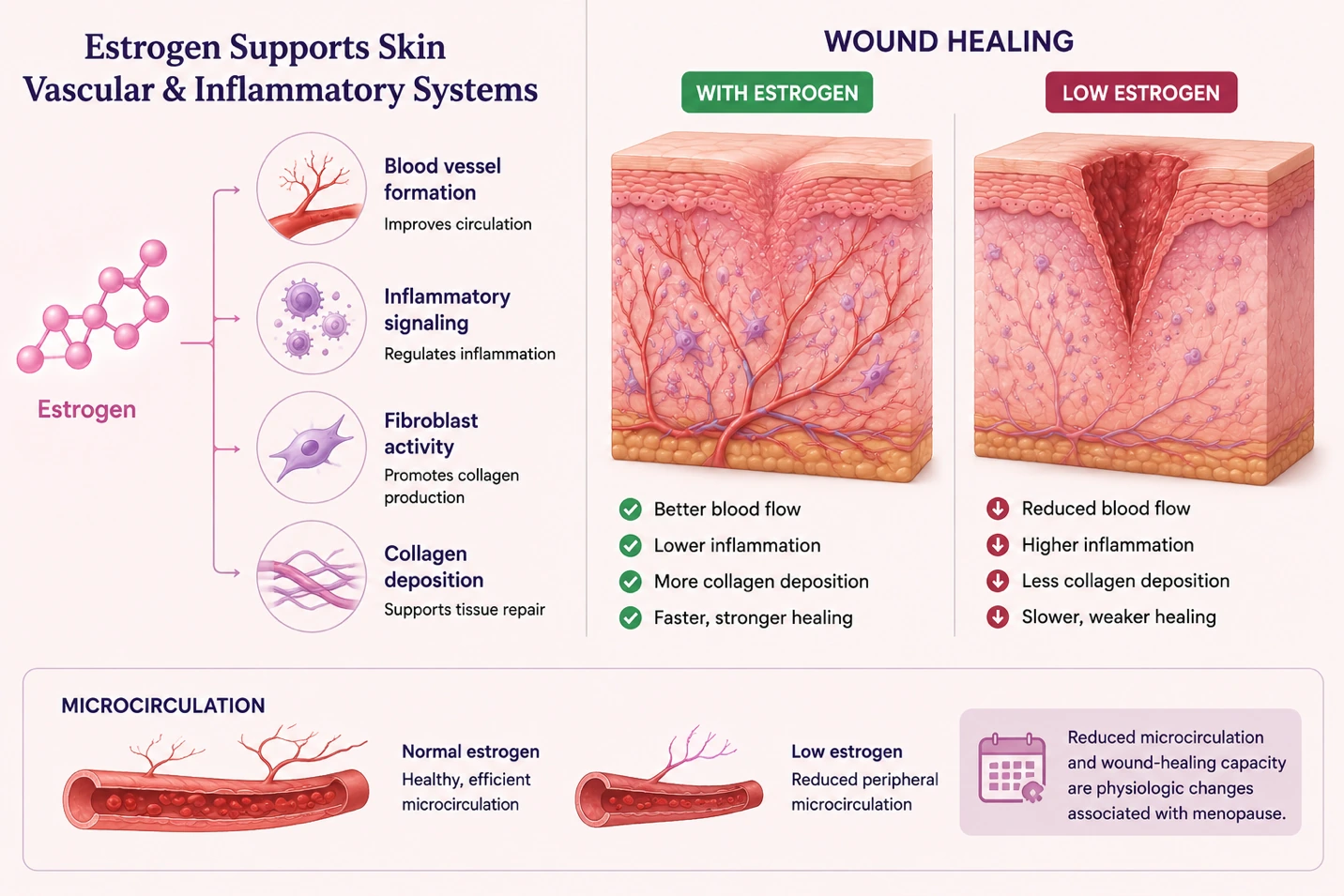
Another underappreciated function of estrogen in the skin is its effect on the vascular and inflammatory systems. Estrogen influences blood vessel formation, inflammatory signaling, fibroblast activity and collagen deposition during wound repair. Experimental and human data suggest that estrogen deficiency contributes to impaired wound healing with age. That may contribute to why older skin becomes more fragile and why cuts or injuries can take longer to heal. Changes in skin microcirculation after menopause have also been documented. The International Menopause Society specifically includes reductions in peripheral microcirculation and wound-healing capacity among the physiologic changes associated with menopause.
And then there are hot flashes
Hot flashes are fundamentally neurovascular events, but you can see them happening in the skin. During a hot flash, blood vessels near the surface of the skin dilate as the body rapidly attempts to dissipate heat. The face, neck and chest can suddenly become red and warm, often followed by sweating. For women who already have rosacea or sensitive skin, these repeated episodes of heat and vasodilation can be particularly noticeable. Heat itself is a well-known rosacea trigger, so some women find that facial flushing becomes much more troublesome during the menopause transition. Persistent redness, bumps or visible blood vessels shouldn’t automatically be assumed to be hormonal, however. Sometimes what appears to be “menopause flushing” is actually rosacea that needs treatment.
Why can you suddenly have acne and dry skin at the same time?
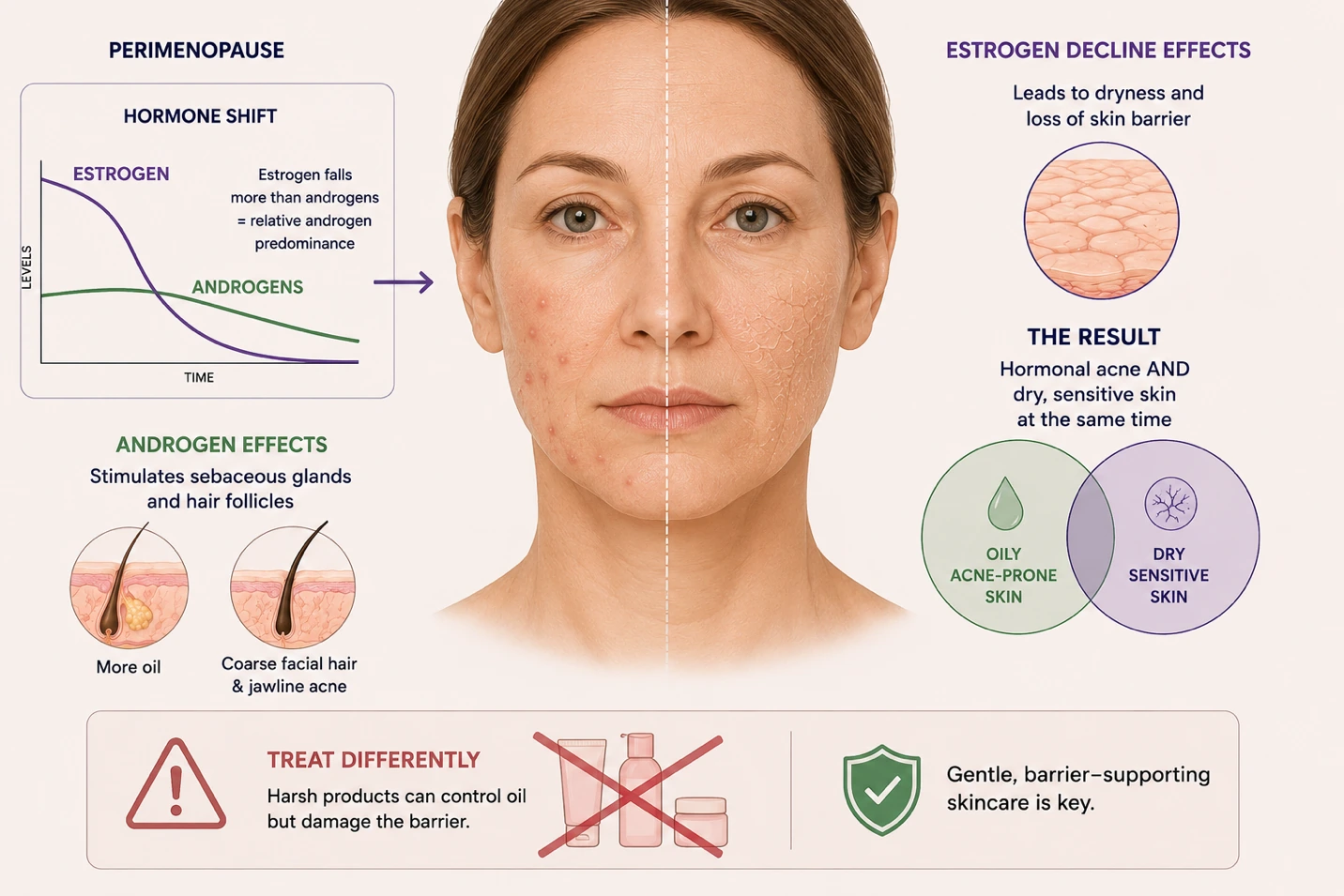
This is one of the stranger contradictions of perimenopause. Estrogen falls much more dramatically than androgen levels do. That creates a state of relative androgen predominance, even when a woman’s actual testosterone level isn’t high. Androgens stimulate sebaceous glands and hair follicles. That relative shift can contribute to jawline and chin acne, as well as the appearance of coarse facial hairs. At the same time, declining estrogen is contributing to dryness and loss of barrier function. So yes, it is entirely possible to have hormonal acne and dry menopausal skin at the same time. That is also why treating menopausal acne exactly like teenage acne can sometimes backfire. Strong cleansers, excessive benzoyl peroxide and aggressive exfoliation may control oil but leave the rest of the skin irritated and inflamed.
The same hormonal shift can affect your hair
Hair follicles are hormone responsive as well. Some women notice increased shedding, a widening part or gradually decreasing hair density during and after menopause. At the same time, relative androgen activity may encourage thicker terminal hairs to appear on the chin or upper lip. But hair loss deserves a little caution. Not every woman losing hair in her 40s or 50s is losing it because of menopause. Thyroid disease, iron deficiency, significant weight loss, nutritional deficiencies, medications, stress and female-pattern hair loss can all contribute and should be considered when hair loss is significant.
DHEA changes too
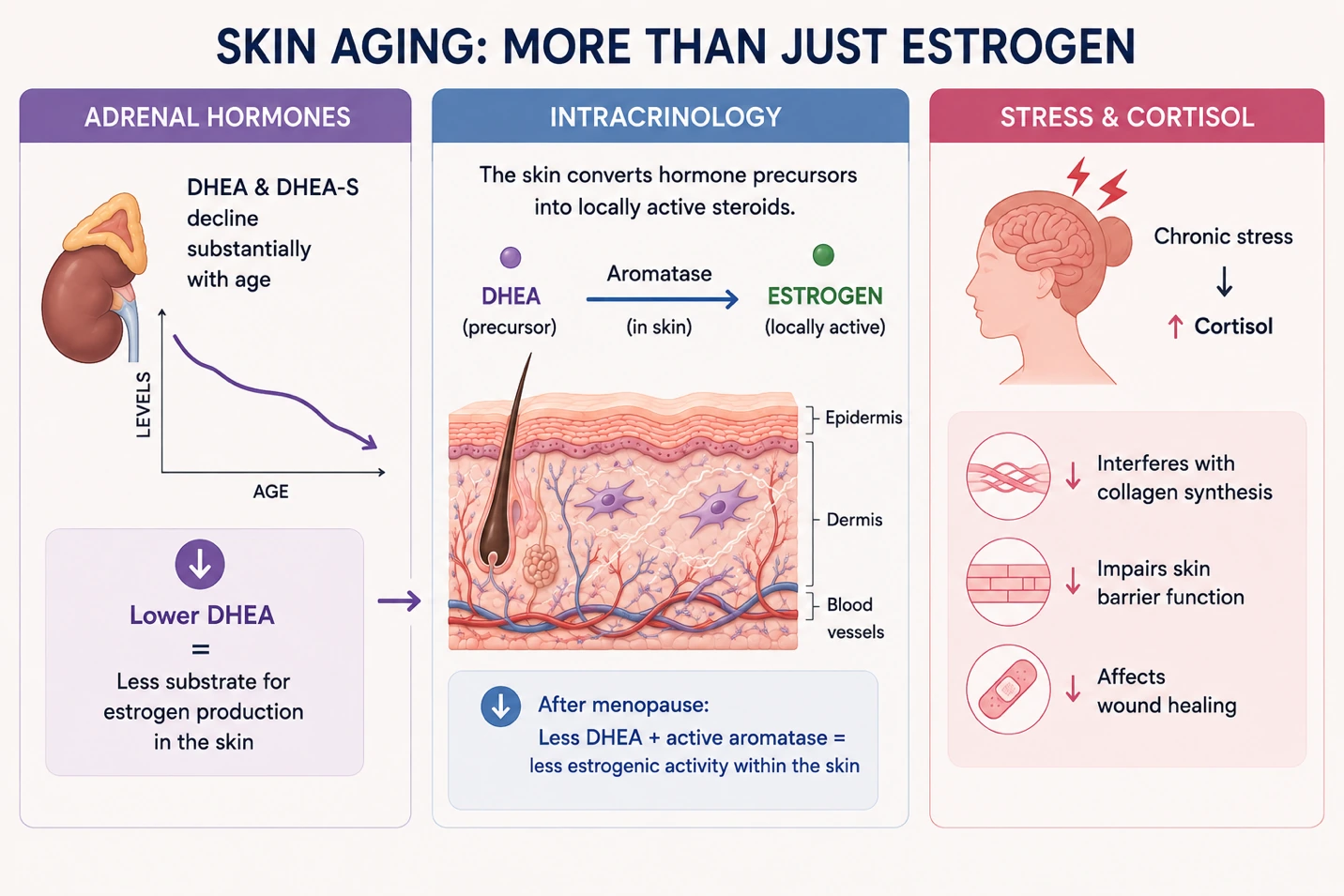
Estrogen isn’t the only hormone involved in skin aging. DHEA and DHEA-S are adrenal androgen precursors that decline substantially with age. Skin itself contains enzymes that allow it to convert circulating hormone precursors into locally active androgens and estrogens. This concept is sometimes referred to as intracrinology—the skin isn’t simply a passive target for hormones circulating in the bloodstream; it can participate in local steroid metabolism. The 2026 International Menopause Society recommendations specifically note that aromatase activity within skin allows DHEA-derived precursors to be converted into estrogen after menopause, while the age-related decline in DHEA contributes to the overall reduction in estrogenic activity within the skin. Cortisol may also matter. Chronic stress and elevated glucocorticoid signaling can interfere with collagen synthesis, impair barrier function and affect wound healing. So menopausal skin aging isn’t controlled by a single hormone. It reflects the interaction of estrogen deficiency, aging, adrenal hormones, genetics and environmental exposures.
And then there is the biggest skin ager of all: the sun
Hormones matter tremendously, but I don’t want women walking away thinking estrogen explains every wrinkle.
It doesn’t.
Ultraviolet radiation is one of the most powerful drivers of premature skin aging. UV exposure increases oxidative stress and activates matrix metalloproteinases, or MMPs, enzymes that break down collagen in the extracellular matrix.
That means a woman entering menopause can essentially be dealing with two collagen problems at once: less support for collagen production because of estrogen deficiency and decades of accumulated UV damage accelerating collagen breakdown. There is even research suggesting that severe photodamage may change how skin responds to estrogen. In a study of 70 older adults, topical estradiol increased procollagen I and III production in sun-protected hip skin, but researchers did not see the same response in chronically sun-damaged facial and forearm skin after two weeks of treatment. The investigators concluded that long-term photodamage may interfere with estrogen’s ability to stimulate collagen production. That is another reason sunscreen remains one of the most important things a woman can do for her skin during menopause. You can spend hundreds of dollars on serums, peptides and procedures, but if you continue exposing your collagen to ultraviolet radiation every day, you are fighting against yourself.
What should women actually do differently?
The first thing I recommend is daily broad-spectrum sunscreen, preferably SPF 30 or higher. Not only on beach days. Every day. And don’t stop at your face. The neck, upper chest and backs of the hands often reveal years of cumulative sun exposure.
The second step is to reconsider the idea that stronger skincare is always better. Menopausal skin generally needs more attention to hydration and barrier repair. Hyaluronic acid can help attract and retain water. Ceramides help restore the lipid barrier. Niacinamide can support barrier function and may also help with uneven pigmentation.
A retinoid remains one of our most evidence-based topical treatments for photoaging and collagen stimulation, but tolerance matters. A woman who previously used prescription tretinoin every night may find that she needs it only two or three nights per week during menopause. For significant pigmentation, deeper wrinkles, substantial loss of skin density or sagging, this is where a dermatologist can be extremely helpful. Procedures that stimulate dermal remodeling may accomplish things that skincare products simply cannot.
What about hormone therapy? Does estrogen actually improve skin?
This is where the research becomes particularly interesting. If estrogen deficiency contributes to collagen loss, would replacing estrogen reverse some of it? Studies suggest that it can.
The original work by Brincat and colleagues compared postmenopausal women receiving hormone treatment with untreated women and found significantly greater skin collagen content and skin thickness in the hormone-treated women.
Other randomized studies have reported increases in dermal thickness and collagen with systemic estrogen therapy, and reviews of the literature generally find favorable effects on skin thickness, collagen and hydration, although results for elasticity are less consistent. This makes biological sense. Restoring estrogen signaling can stimulate fibroblasts and influence collagen synthesis, hyaluronic acid, epidermal thickness and dermal water content.
But I would not prescribe systemic menopausal hormone therapy solely as an anti-aging skin treatment. Hormone therapy should be prescribed when there is an appropriate medical indication after considering a woman’s symptoms, age, time since menopause, medical history and individualized risks and benefits.
If a woman is already an appropriate candidate for menopausal hormone therapy, however, improvement in skin hydration or quality may be an additional benefit.
What about estrogen cream directly on the skin?
This has become a fascinating area of menopause research—and it isn’t simply a social-media trend. Scientists have actually been studying topical estrogen and estriol on aging skin for decades.
One of the most interesting studies came from Schmidt and colleagues in 1996. They treated 59 women with either 0.01% estradiol cream or 0.3% estriol cream for six months. Researchers evaluated skin using multiple measures, including clinical assessment and tissue analysis. Both estrogen preparations produced improvements in several measures of skin aging, and the investigators reported increases in collagen-related measures without evidence of major systemic hormonal effects during the study. An earlier pilot study from the same group specifically treated perimenopausal facial skin with either 0.3% estriol cream or 0.01% estradiol cream for six months, again reporting improvement in skin-aging parameters.
There are biopsy studies as well. In one study, postmenopausal women treated with topical estradiol experienced a 38% increase in measured skin hydroxyproline, a marker of collagen content, along with evidence of increased collagen synthesis. Electron microscopy also showed structural improvement in collagen and elastic fibers. A randomized study of 36 postmenopausal women compared 0.01% estradiol with topical isoflavones for 24 weeks. Estradiol increased epidermal thickness by about 75%, dermal papillae by 125%, fibroblasts by 123% and blood vessels by 77% from baseline. Another randomized, double-blind study involving 30 women used facial skin biopsies before and after 24 weeks of treatment. Both estrogen and genistein increased types I and III collagen, but the increases were significantly greater in the estrogen group. These aren’t just cosmetic measurements. Researchers are seeing actual changes in the tissue.
Estriol cream deserves a little more explanation
Estriol is one of the body’s naturally occurring estrogens, but it is considerably less potent at estrogen receptors than estradiol. That has led to interest in whether topical estriol might provide some local skin effects with less systemic estrogen exposure.
The 1996 Schmidt study is frequently cited because women using 0.3% estriol cream showed improvements in skin-aging parameters over six months. But this is where we have to separate interesting evidence from established medical practice. Topical estriol facial creams are not currently a standard FDA-approved treatment for facial aging. Many products being marketed for this purpose are compounded, formulations vary, and we don’t yet have large long-term trials establishing the ideal concentration, frequency, systemic absorption or long-term safety. So I think topical estrogen for menopausal skin is scientifically interesting and deserves much more research.
Vaginal estrogen is a different story
This is also an important distinction because women sometimes hear “estrogen cream” and assume all estrogen creams are interchangeable. They aren’t. Vaginal estrogen is an established treatment for genitourinary syndrome of menopause, or GSM. The vulva and vagina are also estrogen-responsive tissues, and estrogen deficiency causes thinning of the vaginal epithelium, loss of elasticity, decreased lubrication and changes in the vaginal microbiome and pH. Low-dose vaginal estrogen treats those tissues directly. This isn’t just a matter of putting moisturizer on dry tissue. Estrogen changes the biology of the tissue itself, helping restore epithelial maturation, blood flow and tissue integrity. That is fundamentally different from taking a vaginal estrogen product and deciding to put it on your face. Although the biology is related, vaginal estrogen products are formulated and approved for genitourinary tissues, not facial rejuvenation. I would not routinely recommend that women repurpose their prescription vaginal estrogen cream as facial skincare without discussing it with their physician.
Furthermore, estradiol and estriol creams differ in potency, receptor affinity, dosing, absorption, and duration of action. Estradiol is considerably more potent, while estriol is a weaker, shorter-acting estrogen; therefore, the same milligram dose does not produce the same biological effect. Substituting one for the other could result in undertreatment or greater-than-intended estrogen exposure and systemic absorption. This is especially important when discussing facial use: research showing benefits from a specific concentration of topical estriol cannot be assumed to apply to vaginal estradiol cream. Both activate estrogen receptors, but their doses, formulations, pharmacology, and safety data are not equivalent.
It’s Not Always Menopause
Don’t assume every new skin problem is menopause.
Hormonal changes can explain dryness, thinning, wrinkles, sensitivity, acne, flushing and changes in hair. But menopause doesn’t explain every new mole, growth or lesion. A spot that is changing in size, shape or color, a lesion that repeatedly bleeds or crusts, a sore that doesn’t heal, or a new growth that continues to enlarge deserves evaluation by a dermatologist. The same applies to sudden or significant hair loss. There is a tendency to dismiss a remarkable number of symptoms in women in their 40s and 50s as “just menopause.”
Sometimes they are related to menopause. Sometimes they aren’t.
The bigger message is that our skin is not separate from the rest of our hormonal health. Estrogen isn’t just a reproductive hormone. It is a skin hormone, too. And once we understand that, many of the changes women notice in the mirror during perimenopause suddenly make a lot more sense.
References:
Brincat M, Moniz CF, Studd JWW, Darby AJ, Magos A, Cooper D. Sex hormones and skin collagen content in postmenopausal women. Br Med J (Clin Res Ed). 1983;287(6402):1337-1338. doi:10.1136/bmj.287.6402.1337.
Brincat M, Moniz CJ, Studd JWW, et al. Long-term effects of the menopause and sex hormones on skin thickness. Br J Obstet Gynaecol. 1985;92(3):256-259. doi:10.1111/j.1471-0528.1985.tb01091.x.
Brincat M, Moniz CF, Kabalan S, et al. Decline in skin collagen content and metacarpal index after the menopause and its prevention with sex hormone replacement. Br J Obstet Gynaecol. 1987;94(2):126-129. doi:10.1111/j.1471-0528.1987.tb02338.x.
Brincat M, Kabalan S, Studd JWW, Moniz CF, de Trafford J, Montgomery J. A study of the decrease of skin collagen content, skin thickness, and bone mass in the postmenopausal woman. Obstet Gynecol. 1987;70(6):840-845.
Brincat M, Versi E, Moniz CF, Magos A, de Trafford J, Studd JWW. Skin collagen changes in postmenopausal women receiving different regimens of estrogen therapy. Obstet Gynecol. 1987;70(1):123-127.
Schmidt JB, Binder M, Macheiner W, Kainz C, Gitsch G, Bieglmayer C. Treatment of skin ageing symptoms in perimenopausal females with estrogen compounds: a pilot study. Maturitas. 1994;20(1):25-30. doi:10.1016/0378-5122(94)90097-3.
Schmidt JB, Binder M, Demschik G, Bieglmayer C, Reiner A. Treatment of skin aging with topical estrogens. Int J Dermatol. 1996;35(9):669-674. doi:10.1111/j.1365-4362.1996.tb03701.x.
Rittié L, Kang S, Voorhees JJ, Fisher GJ. Induction of collagen by estradiol: difference between sun-protected and photodamaged human skin in vivo. Arch Dermatol. 2008;144(9):1129-1140. doi:10.1001/archderm.144.9.1129.
Moraes AB, Haidar MA, Soares Júnior JM, Simões MJ, Baracat EC, Patriarca MT. The effects of topical isoflavones on postmenopausal skin: double-blind and randomized clinical trial of efficacy. Eur J Obstet Gynecol Reprod Biol. 2009;146(2):188-192. doi:10.1016/j.ejogrb.2009.04.007.
Patriarca MT, de Moraes ARB, Nader HB, et al. Hyaluronic acid concentration in postmenopausal facial skin after topical estradiol and genistein treatment: a double-blind, randomized clinical trial of efficacy. Menopause. 2013;20(3):336-341. doi:10.1097/GME.0b013e318269898c.
Silva LA, Ferraz Carbonel AA, de Moraes ARB, et al. Collagen concentration on the facial skin of postmenopausal women after topical treatment with estradiol and genistein: a randomized double-blind controlled trial. Gynecol Endocrinol. 2017;33(11):845-848. doi:10.1080/09513590.2017.1320708.
Tyagi T, Alarab M, Leong Y, Lye S, Shynlova O. Local oestrogen therapy modulates extracellular matrix and immune response in the vaginal tissue of post-menopausal women with severe pelvic organ prolapse. J Cell Mol Med. 2019;23(4):2907-2919. doi:10.1111/jcmm.14199.
Rahn DD, Good MM, Roshanravan SM, et al. Effects of preoperative local estrogen in postmenopausal women with prolapse: a randomized trial. J Clin Endocrinol Metab. 2014;99(10):3728-3736. doi:10.1210/jc.2014-1215.