
For decades, ADHD was thought of primarily as a disorder affecting young boys. We now know that’s far from the truth. Millions of women live with ADHD, but many aren’t diagnosed until adulthood—and for some, they don’t realize they have ADHD until they enter perimenopause.
One of the reasons is simple: estrogen plays an important role in how the ADHD brain functions. As estrogen levels fluctuate throughout life—and eventually decline during menopause—many women notice worsening focus, increased distractibility, forgetfulness, emotional overwhelm, and even the feeling that their ADHD medication “just isn’t working anymore.” While research is still evolving, we’re beginning to understand why this happens and how clinicians can better individualize treatment during these hormonal transitions.
The Connection Between Estrogen and ADHD
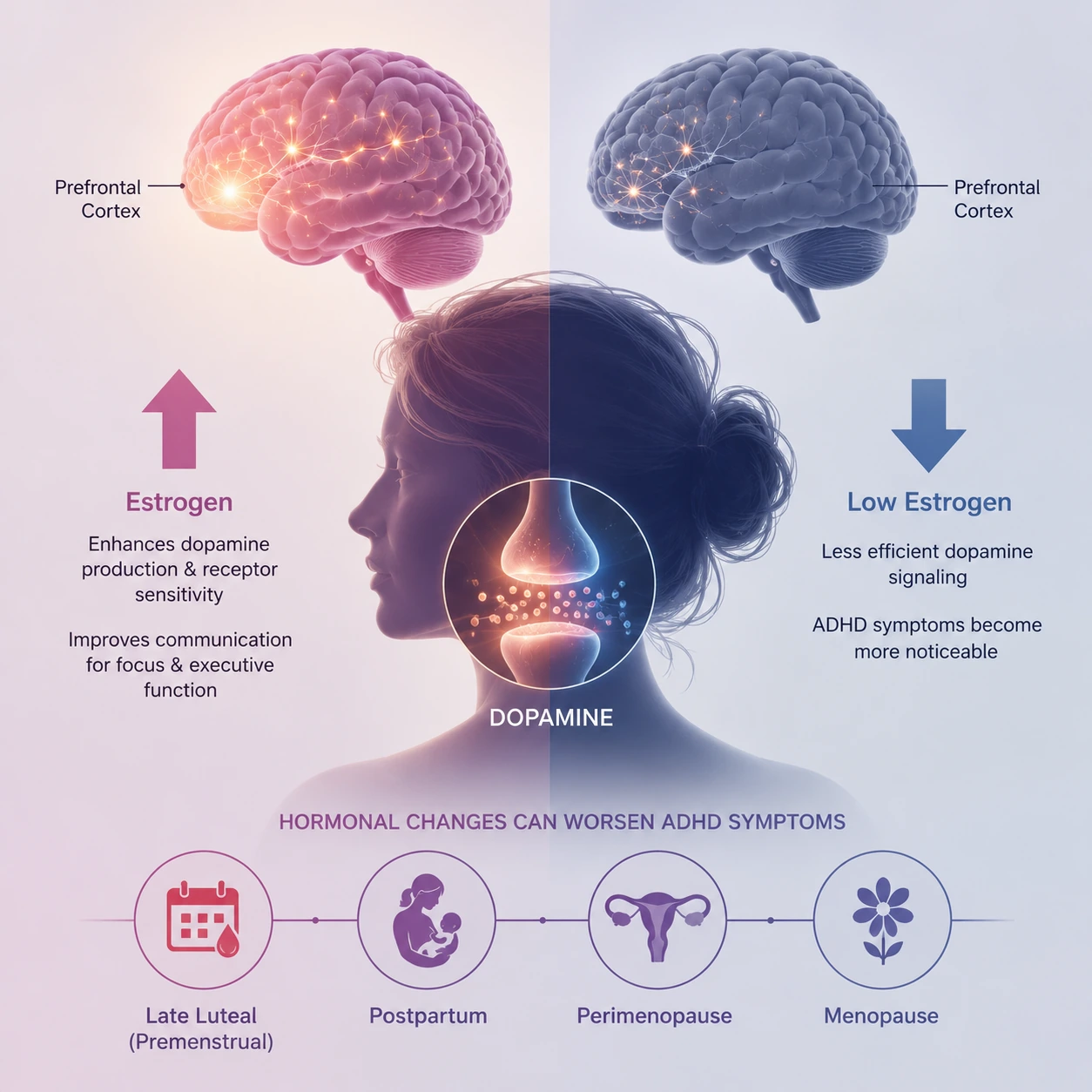
ADHD is primarily a disorder involving the brain’s dopamine and norepinephrine systems, particularly within the prefrontal cortex—the area responsible for attention, working memory, planning, organization, impulse control and emotional regulation. Estrogen isn’t simply a reproductive hormone. It also acts throughout the brain. Research suggests estrogen enhances dopamine production, increases dopamine receptor sensitivity, and improves communication between neurons involved in executive functioning. When estrogen levels fall, dopamine signaling becomes less efficient, making ADHD symptoms more noticeable.
This may explain why many women experience worsening symptoms during periods of hormonal change, including the late luteal (premenstrual) phase, the postpartum period, perimenopause and menopause.
ADHD Symptoms Can Change Throughout the Menstrual Cycle
Many women notice that ADHD doesn’t feel the same every week of the month.
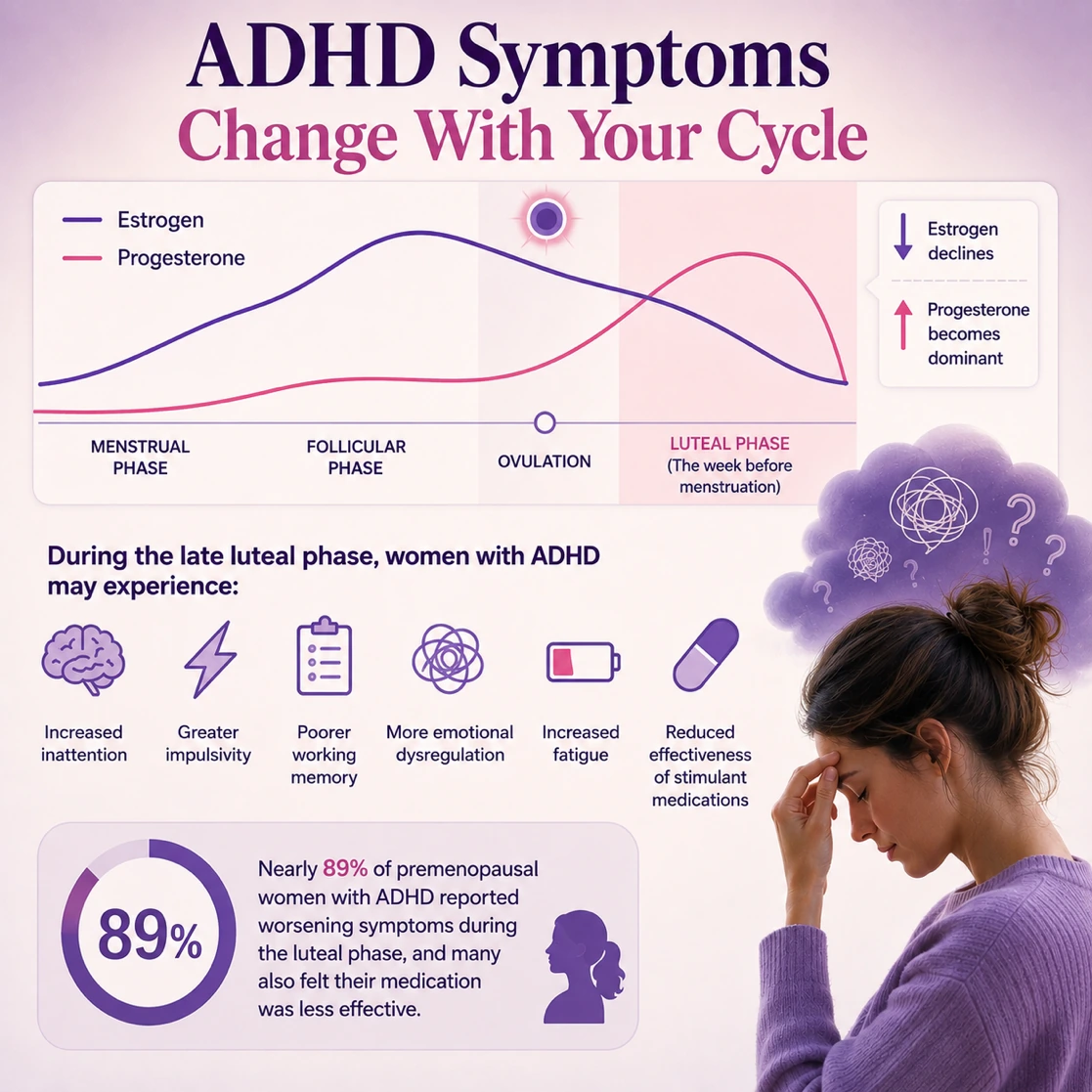
During the late luteal phase—the week before menstruation—estrogen declines while progesterone becomes the dominant hormone.
Studies suggest this hormonal shift is associated with increased inattention, greater, impulsivity, poorer working memory, more emotional dysregulation, increased fatigue, and reduced effectiveness of stimulant medications.
In one survey, nearly 89% of premenopausal women with ADHD reported worsening symptoms during the luteal phase, and many also felt their ADHD medication was less effective during this time. Although every woman is different, recognizing these predictable hormonal patterns can be incredibly helpful when symptoms suddenly seem to “come out of nowhere.”
Why Menopause Can Feel Like ADHD Suddenly Got Worse
Perimenopause is characterized by dramatic fluctuations in estrogen before hormone levels eventually remain chronically low after menopause. For women who already have ADHD, these hormonal changes can amplify symptoms. For others, lifelong mild ADHD may have been successfully compensated for—until menopause removes estrogen’s supportive effects on brain function.
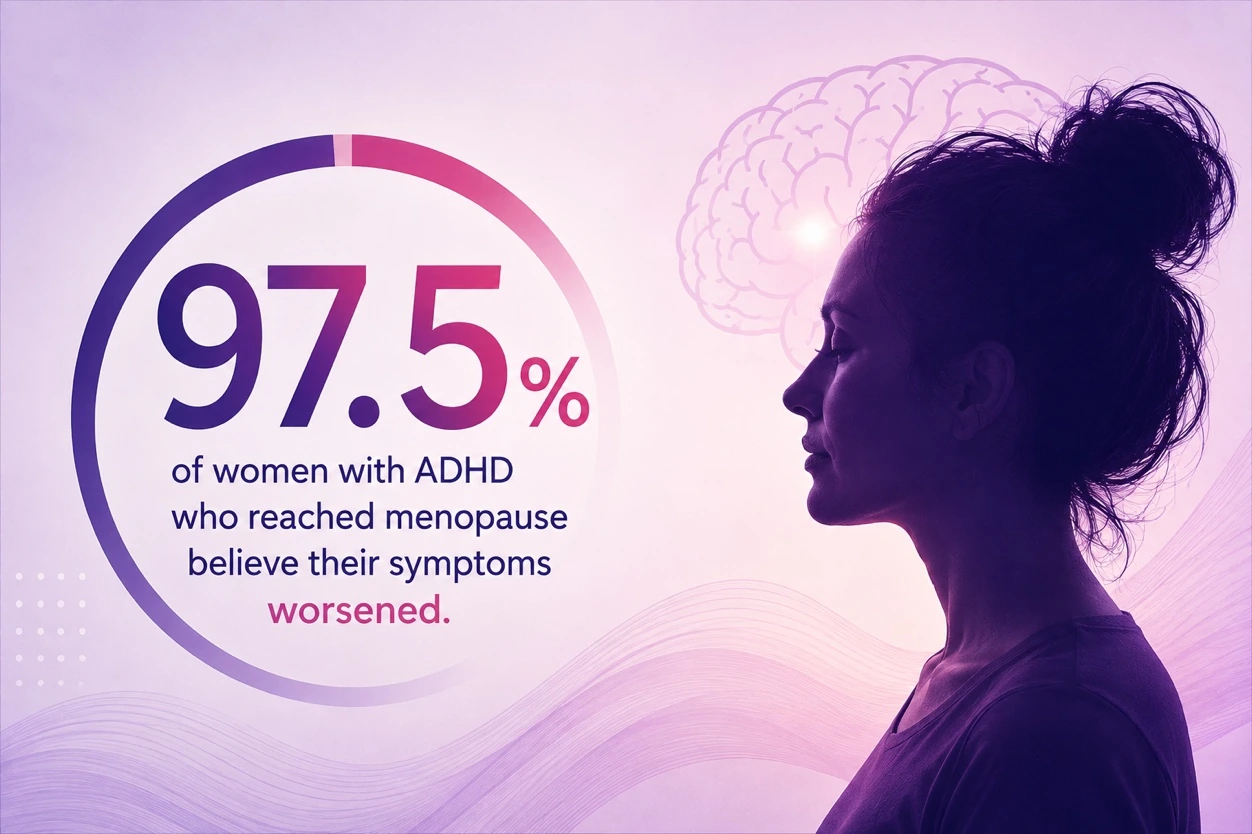
Common symptoms include brain fog, difficulty concentrating, forgetfulness, losing words mid-conversation, trouble completing tasks, emotional reactivity, increased anxiety, poor sleep and reduced motivation. These symptoms overlap substantially with menopausal symptoms, making diagnosis challenging. In one survey of 600 women with ADHD, an astonishing 97.5% of those who had reached menopause believed their ADHD symptoms had worsened. That doesn’t necessarily mean menopause causes ADHD—but it may unmask symptoms that had previously been easier to manage.
Can Hormone Therapy Help ADHD?
This is one of the most common questions women ask. The honest answer is: We don’t know yet.
At present, no randomized controlled trials have specifically evaluated menopausal hormone therapy (HRT) as a treatment for ADHD. That means we cannot recommend HRT solely for ADHD symptom control. However, the available evidence provides some interesting clues. Studies in women without ADHD suggest estrogen therapy may improve attention and aspects of cognitive function during early menopause. Transdermal estradiol has also demonstrated antidepressant effects in some perimenopausal women. Because of these findings, many menopause specialists consider hormone therapy—particularly transdermal 17β-estradiol combined with micronized progesterone (when progesterone is indicated)—as a potential adjunctive treatment in women who have both menopause symptoms and ADHD. Importantly, hormone therapy should not replace standard ADHD medications when those medications are indicated. Instead, improving sleep, reducing hot flashes, stabilizing mood, and restoring estrogen levels may create an environment where ADHD symptoms become easier to manage.
Some experts also prefer micronized progesterone over certain synthetic progestins because laboratory and clinical data suggest synthetic progestins may blunt some of estrogen’s neuroprotective effects.
At the same time, it’s important to acknowledge conflicting evidence. A large analysis from the UK Biobank did not find that HRT prevented menopause-associated changes in mental health or brain volume. However, researchers noted the possibility of confounding by indication—women experiencing more severe menopausal symptoms are also more likely to receive hormone therapy, making interpretation difficult. As with many areas of menopause medicine, the science is still evolving.
What About Adjusting ADHD Medication Around Your Cycle?
One of the most exciting areas of emerging research involves individualized stimulant dosing.
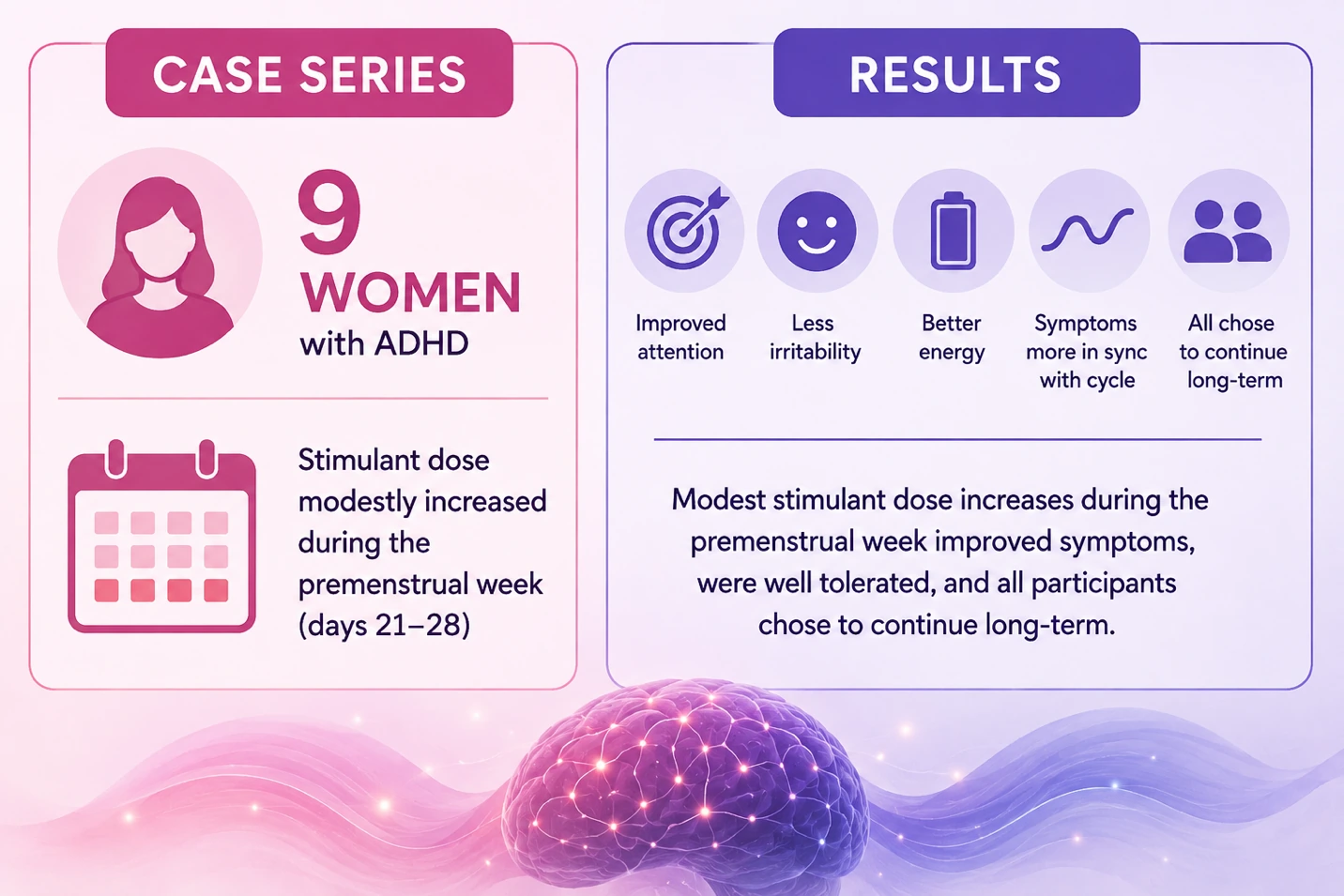
Currently, there are no evidence-based dosing guidelines for adjusting ADHD medications during hormonal transitions. However, a small but intriguing case series followed nine women with ADHD whose stimulant doses were modestly increased during the premenstrual week (approximately days 21–28 of the menstrual cycle). The results were encouraging, improved attention, less irritability, better energy, symptoms more closely resembled the rest of the menstrual cycle, minimal side effects, every participant chose to continue the strategy long-term. These findings are consistent with earlier pharmacologic studies suggesting stimulants may be less effective during the late luteal phase when estrogen levels decline.
Although this represents only case-level evidence—not randomized trials—it highlights the importance of individualized care rather than assuming one medication dose works equally well throughout the month.
A Practical Approach to Monitoring Hormone-Related ADHD
Because symptoms vary significantly from woman to woman, careful tracking is often more valuable than immediately changing medications.
A practical framework includes:
Step 1: Establish Your Baseline
Track for at least two to three menstrual cycles:
- ADHD symptoms
- Mood
- Sleep quality
- Medication effectiveness
- Menstrual cycle phase
Validated tools such as the Adult ADHD Self-Report Scale (ASRS) or a simple daily symptom diary can be helpful.
Step 2: Identify Your Pattern
Many women notice worsening symptoms during the five to seven days before menstruation. Others experience symptom flares during the first few days of bleeding or throughout perimenopause when cycles become unpredictable.
Step 3: Discuss Individualized Treatment
If a consistent hormonal pattern emerges, your clinician may consider:
- Adjusting stimulant timing
- Temporarily increasing stimulant dosage during predictable symptom windows
- Treating coexisting sleep disruption
- Addressing anxiety or depression
- Evaluating whether menopausal hormone therapy is appropriate for menopause symptoms
Any medication adjustments should be individualized and closely monitored.
Step 4: Monitor Safety
Whenever stimulant doses or hormone therapy are changed, clinicians should monitor:
- Blood pressure
- Heart rate
- Sleep
- Appetite
- Mood
- Side effects
- Overall symptom improvement
Women starting menopausal hormone therapy should also undergo routine cardiovascular risk assessment and individualized counseling regarding the risks and benefits of treatment.
The Bottom Line
For many women, worsening ADHD symptoms during perimenopause aren’t “all in your head”—they may reflect real neurobiological changes driven by declining estrogen. Hormonal fluctuations can influence dopamine signaling, executive function, and even the effectiveness of stimulant medications.
Although there is currently no high-quality evidence supporting hormone therapy as a primary treatment for ADHD, many experts believe menopausal hormone therapy may play an important supportive role for women who are also experiencing bothersome menopausal symptoms. Likewise, carefully individualized stimulant adjustments may help some women navigate predictable hormonal fluctuations, but this approach is based on limited evidence and should be undertaken with close medical supervision.
The most important takeaway is that ADHD in women is not static. It evolves across the lifespan, and understanding the influence of hormones allows clinicians and patients to move beyond a one-size-fits-all approach. As research advances, integrating reproductive hormones into ADHD care may become an increasingly important part of precision medicine for women.
References
de Jong M, Kooij JJS, Bijlenga D, Wynchank D. Female-specific pharmacotherapy in ADHD: premenstrual adjustment of psychostimulant dosage. Front Psychiatry. 2023;14:10751335. doi:10.3389/fpsyt.2023.10751335
Duarte-Guterman P, Leung A, Einstein G. Menopause, cognition, and attention-deficit/hyperactivity disorder in women: a review. Front Glob Womens Health. 2023;4:1133732. doi:10.3389/fgwh.2023.1133732
Kooij JJS, Bijlenga D, Wynchank D, et al. Updated European Consensus Statement on diagnosis and treatment of adult ADHD in women. Eur Psychiatry. 2025;68(1):e22. doi:10.1192/j.eurpsy.2025.18
Martel MM, Gobrogge KL, Breedlove SM, Nigg JT. Interactive effects of estrogen, progesterone, and testosterone on the symptom expression of ADHD in healthy young women. Psychoneuroendocrinology. 2008;33(1):85-98. doi:10.1016/j.psyneuen.2007.10.008
Quinn PO. Treating adolescent girls and women with ADHD: gender-specific issues. Medscape J Med. 2008;10(9):205.
Shanmugan S, Epperson CN. Estrogen and the prefrontal cortex: towards a new understanding of estrogen’s effects on executive functions in the menopause transition. Hum Brain Mapp. 2014;35(3):847-865. doi:10.1002/hbm.22218
Solís-Ortiz S, Corsi-Cabrera M. Sustained attention is favored by progesterone during early luteal phase and visuo-spatial memory by estrogens during ovulatory phase in young women. Psychoneuroendocrinology. 2008;33(7):989-998. doi:10.1016/j.psyneuen.2008.04.012
The North American Menopause Society. The 2022 hormone therapy position statement of The North American Menopause Society. Menopause. 2022;29(7):767-794. doi:10.1097/GME.0000000000002028
Woolley CS, McEwen BS. Estradiol mediates fluctuation in hippocampal synapse density during the estrous cycle in the adult rat. J Neurosci. 1992;12(7):2549-2554. doi:10.1523/JNEUROSCI.12-07-02549.1992
Zhu D, Chung HF, Dobson AJ, et al. Associations of menopausal hormone therapy with brain health and mental health outcomes in women: a UK Biobank study. PLoS Med. 2024;21(2):e1004360. doi:10.1371/journal.pmed.1004360