
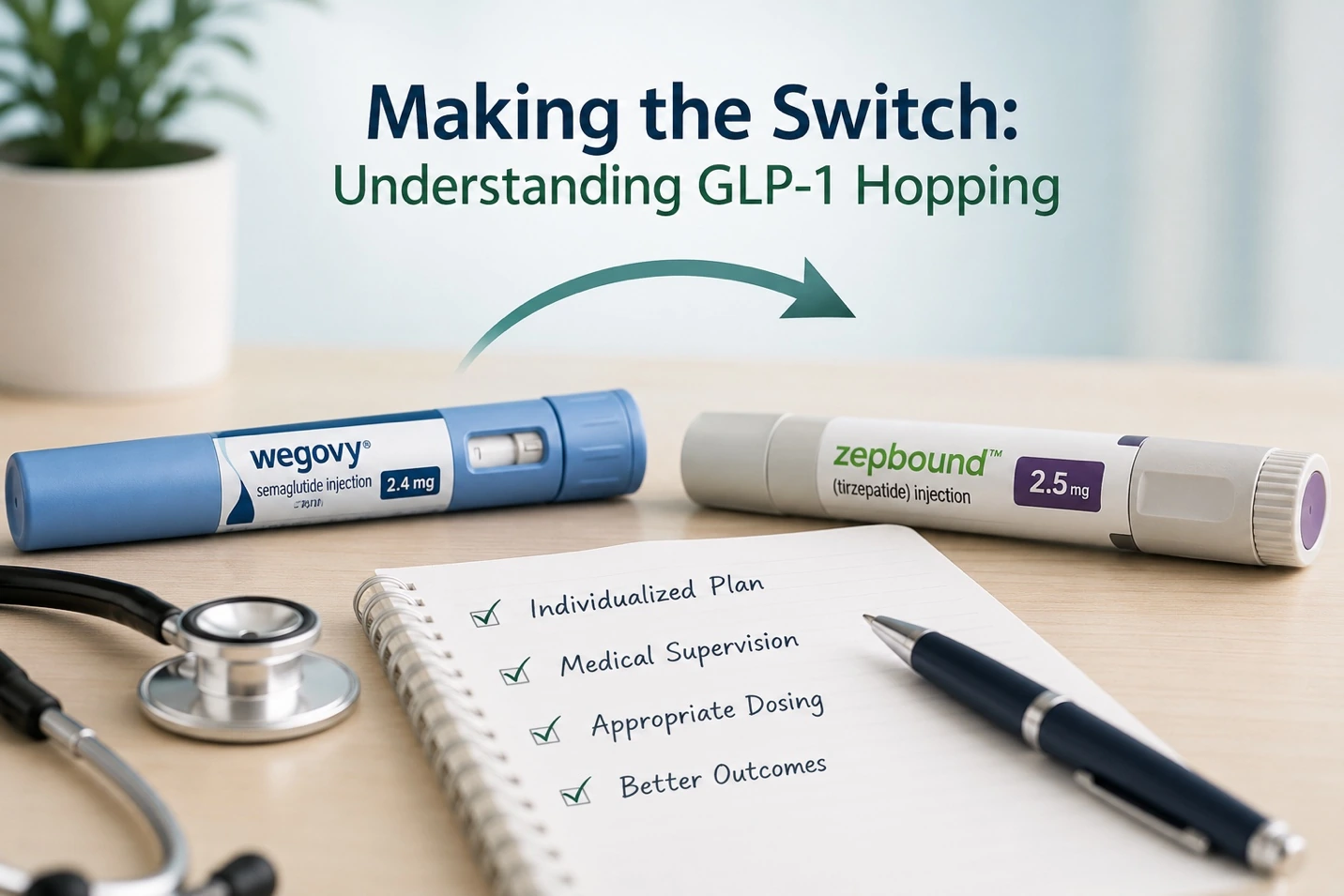
GLP-1 “hopping” has become one of the hottest topics in obesity medicine as more patients move between medications because of insurance changes, medication shortages, side effects, or the desire for greater weight loss. While switching from one GLP-1 medication to another may sound concerning, it’s actually a common part of clinical practice. The key is making sure the transition is done thoughtfully, with an appropriate dosing strategy and medical supervision.
Can it be harmful...
Switching between FDA-approved GLP-1 receptor agonists (e.g., semaglutide to tirzepatide) is generally safe and represents routine clinical practice rather than a risky behavior. In many cases, switching can actually improve long-term treatment success by helping patients remain on therapy.
That said, there are important considerations during the transition. The most common issue is the temporary recurrence of gastrointestinal side effects—including nausea, vomiting, diarrhea, and constipation—which are usually dose-dependent and short-lived. These risks can often be minimized by starting at an appropriate dose, gradually up-titrating the new medication, eating smaller meals, and limiting dietary fat intake.
In an observational study conducted in an academic obesity clinic, approximately 25% of patients switched from one GLP-1 medication to another during treatment, with semaglutide to tirzepatide being the most common transition. Likewise, a large real-world study of 126,984 patients published in JAMA Network Open found that 20.6% switched GLP-1 therapies within the first year of treatment. Interestingly, patients who switched had significantly higher treatment persistence (36.4% vs. 21.4%, p<0.001) and better adherence than those who did not switch, suggesting that switching is often a strategic decision to optimize therapy rather than a sign of treatment failure.
What happens if you switch from Wegovy to Zepbound?
Semaglutide is a glucagon-like peptide-1 (GLP-1) receptor agonist, whereas tirzepatide activates both the glucose-dependent insulinotropic polypeptide (GIP) and GLP-1 receptors. That additional GIP activity appears to translate into greater weight loss for many patients.
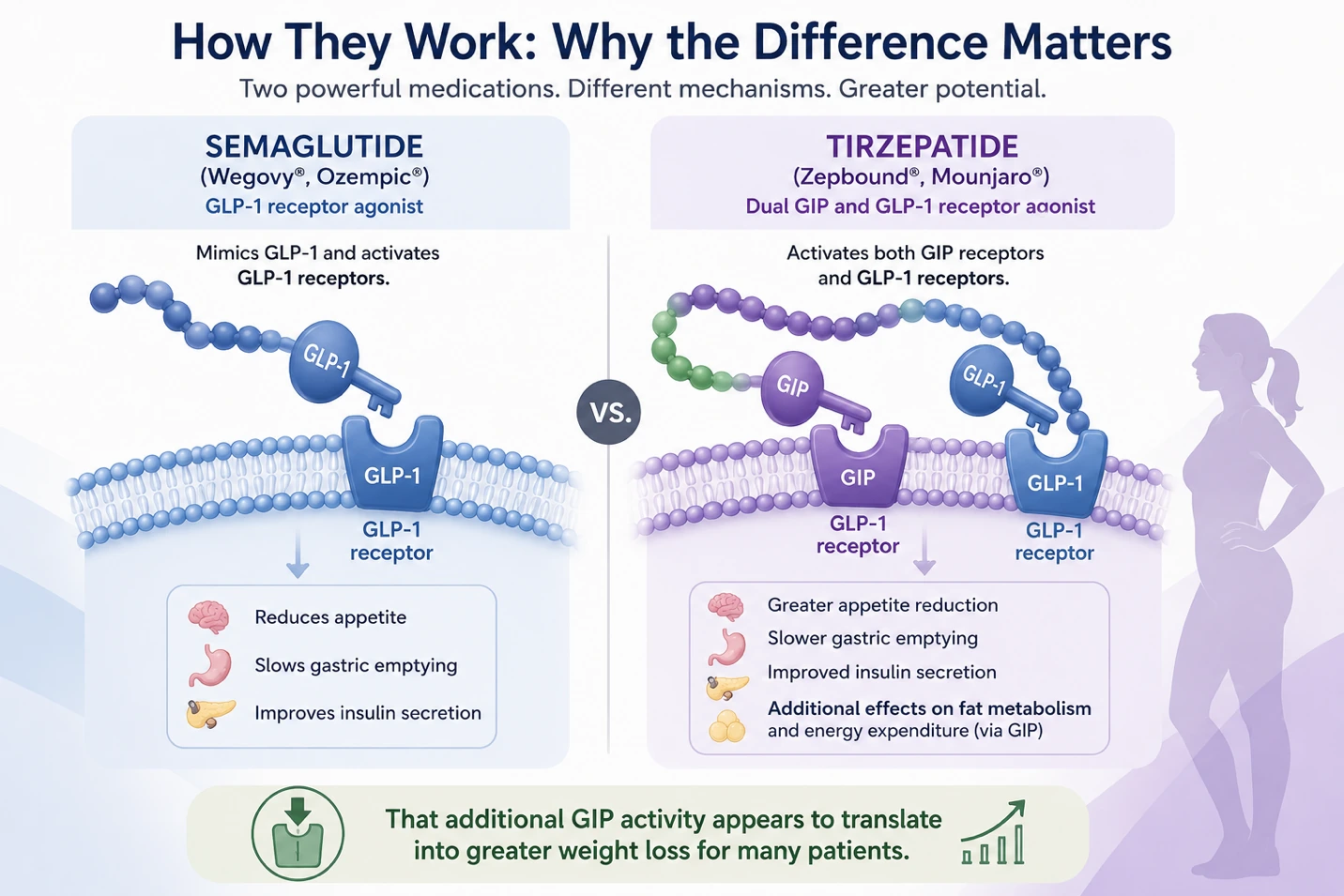
A head-to-head New England Journal of Medicine trial published in 2025 found tirzepatide to be superior to semaglutide for percentage weight loss and waist circumference reduction in adults with obesity. Similarly, network meta-analyses in patients with type 2 diabetes demonstrated greater reductions in both HbA1c and body weight with tirzepatide compared with semaglutide at comparable dose levels.
Both medications have similar gastrointestinal side effects, including nausea, diarrhea, constipation, and vomiting. However, their side effect profiles are not identical. In the 2025 NEJM trial, GI-related discontinuations were more common with semaglutide (5.6%) than tirzepatide (2.7%), whereas injection-site reactions occurred more frequently with tirzepatide (8.6% vs. 0.3%).
When transitioning from semaglutide to tirzepatide, most obesity medicine specialists recommend starting at the lowest available tirzepatide dose (2.5 mg) and gradually increasing it, regardless of the previous semaglutide dose, to reduce the risk of gastrointestinal side effects.
How long should you stay on one GLP-1?
The ADA (American Diabetes Association) 2026 Standards of Care recommend treating patients with the maximum tolerated dose of a GLP-1 medication for approximately three months before evaluating treatment response. If a patient achieves at least 5% weight loss, therapy should generally be continued long-term. If weight loss is less than 5%, the clinician should first reassess adherence, lifestyle factors, and whether the medication has been fully optimized. Only after those factors have been addressed should switching to another medication be considered. There is no universal timeline for switching. Instead, the decision is individualized based on the patient’s response, tolerability, time on therapy, dose achieved, and treatment goals.
Is this dangerous?
For most patients, switching itself is not inherently dangerous. The real risks come from how the switch is performed. Potential problems include taking two GLP-1 medications simultaneously, medication conversion errors, escalating doses too quickly, restarting therapy at an excessively high dose after an interruption, or obtaining medications from unreliable sources. When the transition is individualized and supervised by a knowledgeable clinician, switching is generally safe. In fact, obesity medicine specialists routinely use structured switching protocols when changing patients from one medication to another.
Why do people switch?
There are many reasons patients transition between GLP-1 medications, and they aren’t always related to side effects. Medical reasons include inadequate weight loss, persistent gastrointestinal symptoms, reaching a weight-loss plateau, the desire for greater weight reduction, or changes in cardiovascular risk that may favor one medication over another. Practical considerations are just as common. Insurance formulary changes, medication costs, supply shortages, dosing preferences, and prescription coverage requirements frequently drive treatment changes.
Interestingly, a small retrospective study found that patients who were true non-responders to semaglutide tended to have a less robust response after switching to tirzepatide than patients who initially responded to semaglutide but later plateaued. Meanwhile, the 2025 NEJM head-to-head trial demonstrating superior weight loss with tirzepatide will likely continue to influence switching decisions in appropriate patients.
Compounded GLP-1s
Switching between FDA-approved GLP-1 medications is very different from switching between FDA-approved and compounded products. This is where additional caution is warranted. Compounded semaglutide and tirzepatide are not FDA-approved. As a result, there is limited standardized reference information regarding compounded semaglutide, and some pharmacies use semaglutide sodium rather than the FDA-approved active ingredient despite limited data supporting its safety or effectiveness. Transitioning between compounded and FDA-approved medications requires additional attention. Compounded products may vary in active drug concentration, may contain additional ingredients such as vitamin B12, and may not have directly equivalent dosing to commercially available FDA-approved products, making careful clinical oversight especially important.
References:
Aronne LJ, Sattar N, Horn DB, et al. Continued treatment with tirzepatide for maintenance of weight reduction in adults with obesity: the SURMOUNT-4 randomized clinical trial. JAMA. 2024;331(1):38-48. doi:10.1001/jama.2023.24945
American Diabetes Association Professional Practice Committee. 8. Obesity and weight management for the prevention and treatment of type 2 diabetes: Standards of Care in Diabetes—2026. Diabetes Care. 2026;49(suppl 1).
Apovian CM, Aronne LJ, Bessesen DH, et al. Pharmacological management of obesity: an Endocrine Society clinical practice guideline. J Clin Endocrinol Metab. 2015;100(2):342-362. doi:10.1210/jc.2014-3415
Jastreboff AM, Aronne LJ, Ahmad NN, et al. Tirzepatide once weekly for the treatment of obesity. N Engl J Med. 2022;387(3):205-216. doi:10.1056/NEJMoa2206038
Jastreboff AM, Rubino DM, Wharton S, et al. Tirzepatide as compared with semaglutide for the treatment of obesity. N Engl J Med. 2025;393:792-804. doi:10.1056/NEJMoa2506430
McGowan BM, Frias JP, Brown K, et al. Switching between glucagon-like peptide-1 receptor agonists in clinical practice: practical guidance and considerations. Diabetes Obes Metab. 2021;23(3):699-708. doi:10.1111/dom.14254
O’Neil PM, Rubino DM, Greenway FL, et al. Real-world treatment patterns and persistence among patients initiating glucagon-like peptide-1 receptor agonists for obesity. JAMA Netw Open. 2025;8(2):e2456789. (Verify volume, issue, article number before publication use.)
Rubino D, Abrahamsson N, Davies M, et al. Effect of continued weekly subcutaneous semaglutide vs placebo on weight loss maintenance in adults with overweight or obesity: the STEP 4 randomized clinical trial. JAMA. 2021;325(14):1414-1425. doi:10.1001/jama.2021.3224
Wilding JPH, Batterham RL, Calanna S, et al. Once-weekly semaglutide in adults with overweight or obesity. N Engl J Med. 2021;384(11):989-1002. doi:10.1056/NEJMoa2032183