
“I’ve never had anxiety before. Why is this happening?”
This is one of the most common conversations I have with women in my office. They tell me they’ve never struggled with anxiety before, but now they wake up at 3 a.m. with their heart racing. Others tell me they’ve suddenly developed a fear of driving or feel constantly on edge for no apparent reason. Then I look at their age. More often than not, they’re in their late 30s, 40s, or early 50s.
If this sounds familiar, you’re not alone—and you’re certainly not imagining it.
Many women develop anxiety for the very first time during perimenopause. It doesn’t mean you’re weak, overly emotional, or simply “stressed out.” In many cases, your brain chemistry is literally changing. Understanding why this happens can be incredibly reassuring because once you understand the cause, you can begin to find effective solutions.
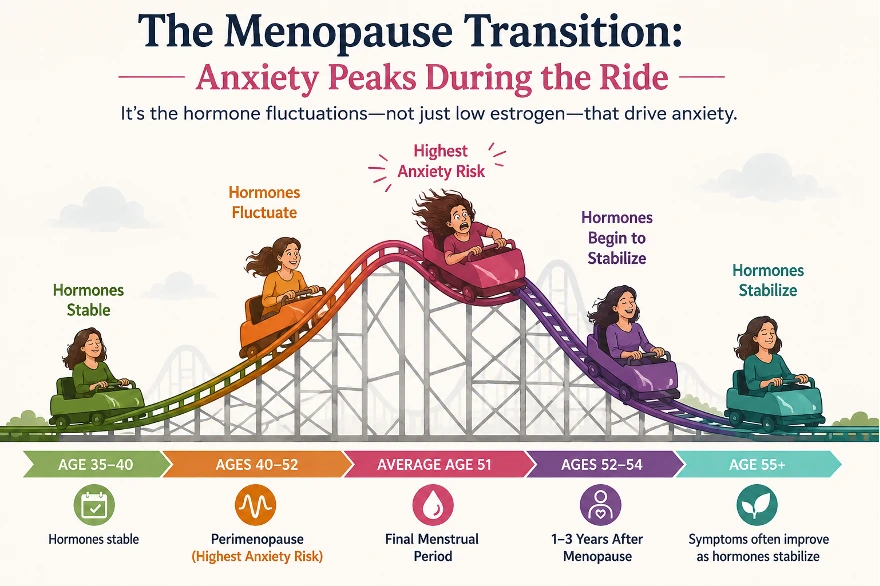
One of the most important things to understand is that anxiety isn’t evenly distributed throughout a woman’s life. It tends to cluster around the menopause transition. During our mid-30s, hormone levels are generally stable. However, between the ages of approximately 40 and 52, most women enter perimenopause, the stage of life associated with the greatest risk of developing anxiety. Menopause itself is actually just a single point in time—the day that marks one full year since your final menstrual period. During the first one to three years after menopause, hormone levels begin to stabilize, and many women notice that their symptoms gradually improve. By the mid-50s, anxiety has significantly improved for many women, although some continue to experience lingering symptoms.
Just how common is perimenopausal anxiety? Studies estimate that approximately 40% to 60% of women experience anxiety symptoms during the menopause transition. Women who have struggled with anxiety earlier in life are certainly at higher risk, but what’s often surprising is that many women develop anxiety for the first time during perimenopause despite never having experienced it before.
So why does this happen?
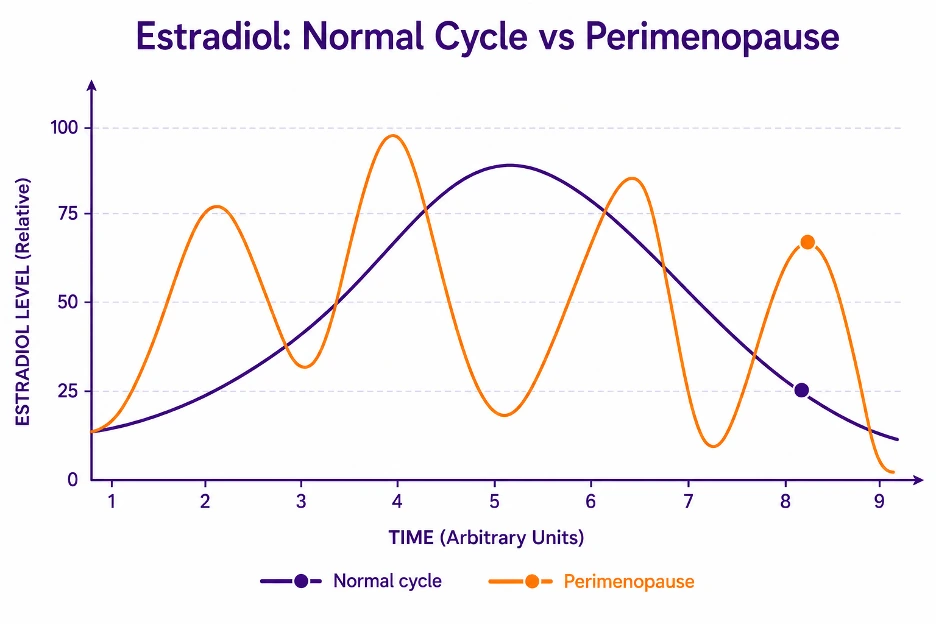
Most people think of estrogen as simply a reproductive hormone, but estrogen plays a much larger role throughout the body. It influences nearly every major neurotransmitter involved in mood regulation, including serotonin, dopamine, GABA, acetylcholine, and endorphins. These chemical messengers help regulate mood, motivation, focus, sleep, stress resilience, and emotional well-being. When estrogen is stable, these systems tend to function smoothly. During perimenopause, however, estrogen doesn’t simply decline—it fluctuates dramatically. One week it may be very high, while the next week it may fall significantly. As estrogen fluctuates, so do the neurotransmitters that depend on it.
One of the biggest misconceptions is that anxiety occurs simply because estrogen levels become low. In reality, the biggest problem during early perimenopause isn’t necessarily estrogen deficiency—it’s estrogen unpredictability. Your brain prefers consistency. Rapid hormonal peaks and crashes make it difficult for the brain to adapt, and many experts believe these fluctuations are what trigger anxiety symptoms. Estrogen normally acts like a buffer that helps the brain manage stress. When hormone levels become erratic, that protective buffering system becomes less reliable, making even everyday stressors feel much more overwhelming.
Adding to this is the fact that progesterone often begins declining even before estrogen does. As ovulation becomes less predictable during perimenopause, progesterone production decreases. This matters because progesterone is converted within the brain into allopregnanolone, a neurosteroid that enhances the activity of GABA, the brain’s primary calming neurotransmitter. When progesterone falls, allopregnanolone levels decline as well, reducing GABA activity. The result can be increased anxiety, more restless sleep, racing thoughts, and those frustrating 3 a.m. awakenings that so many women describe.
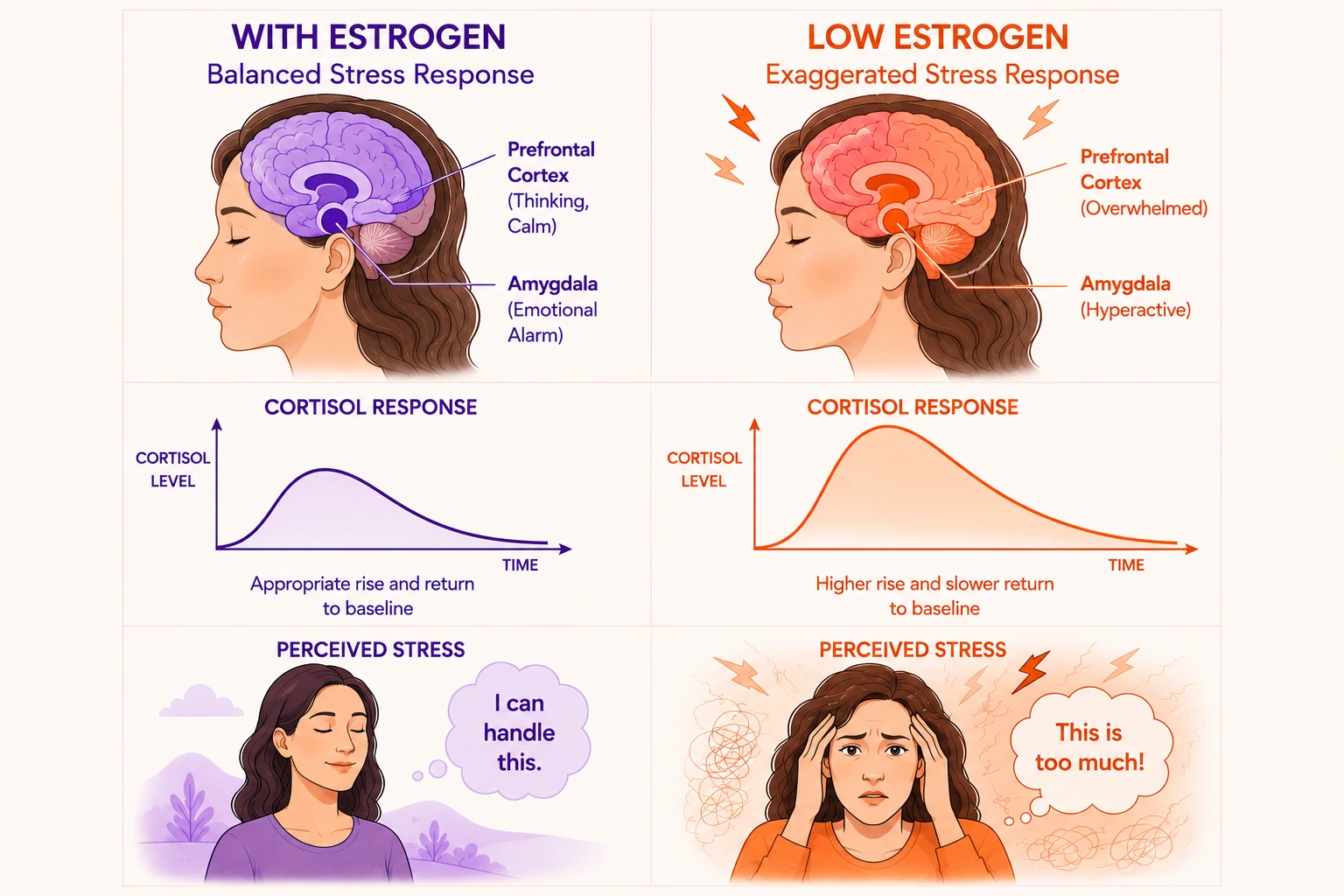
Estrogen also plays an important role in regulating cortisol, our body’s primary stress hormone. As estrogen becomes less predictable, cortisol responses become more exaggerated. Women often tell me, “I know this shouldn’t bother me this much, but I just can’t handle it anymore.” That’s because the brain’s stress response has become much more sensitive. Small stressors that once felt manageable can suddenly feel overwhelming.
Unfortunately, this often leads to a vicious cycle. Hormonal changes and hot flashes wake you during the night, usually around 3 a.m. Poor sleep increases cortisol levels, which further worsens anxiety. Increased anxiety then makes it even harder to fall back asleep. Sleep deprivation also makes hot flashes feel more intense, which causes even more nighttime awakenings. Around and around the cycle goes, with each problem feeding the next.
Another symptom that frequently surprises women is heart palpitations. In my primary care practice, I take these symptoms seriously. Depending on the individual situation, I often perform a thorough evaluation that may include laboratory testing, an electrocardiogram, a Holter monitor, a stress test, or an echocardiogram to rule out conditions such as atrial fibrillation, supraventricular tachycardia, thyroid disease, anemia, or structural heart disease. Most of the time, those tests come back completely normal. That doesn’t mean nothing is happening. Estrogen influences the autonomic nervous system, blood vessels, and adrenaline signaling. As hormone levels fluctuate, they can activate the body’s fight-or-flight response, producing palpitations. Those palpitations understandably create anxiety, and anxiety can make the palpitations even worse, creating yet another self-perpetuating cycle.
These hormonal fluctuations also affect how the brain processes fear. Three important brain regions work together to regulate emotions: the prefrontal cortex, which serves as the brain’s logical decision-maker; the amygdala, which detects fear and threats; and the hippocampus, which helps process memories and determine whether a situation is actually dangerous. Estrogen helps these regions communicate efficiently with one another. When estrogen fluctuates, communication between these areas becomes less effective. The amygdala becomes more reactive while the prefrontal cortex has a harder time calming the fear response. Without estrogen’s stabilizing influence, fear can temporarily gain the upper hand over logic.
Some women appear to be particularly sensitive to hormonal fluctuations. Women with a history of premenstrual syndrome (PMS), premenstrual dysphoric disorder (PMDD), postpartum depression or anxiety, post-traumatic stress disorder (PTSD), or previous anxiety disorders are more likely to experience worsening anxiety during perimenopause. These conditions suggest that the brain may be especially responsive to changes in reproductive hormones.
The encouraging news is that there are many effective treatment options. Lifestyle interventions remain the foundation of treatment and include prioritizing good sleep hygiene, engaging in regular aerobic exercise and resistance training, eating adequate protein, limiting excess caffeine and alcohol, practicing mindfulness or breathing exercises, and incorporating stress-reducing activities such as yoga. Many women also ask about supplements. While numerous supplements are marketed for menopause-related anxiety, the scientific evidence supporting most of them remains limited. Some women report meaningful improvement, but responses vary considerably from person to person.
Among non-medication therapies, cognitive behavioral therapy (CBT) has the strongest scientific evidence for treating anxiety during perimenopause. CBT is a structured form of psychotherapy that helps people recognize and change unhelpful patterns of thinking that contribute to anxiety. The basic concept is simple: our thoughts influence our feelings, which in turn influence our behaviors. By learning to reinterpret stressful situations differently, many women experience significant improvements in anxiety, panic attacks, health anxiety, and insomnia.
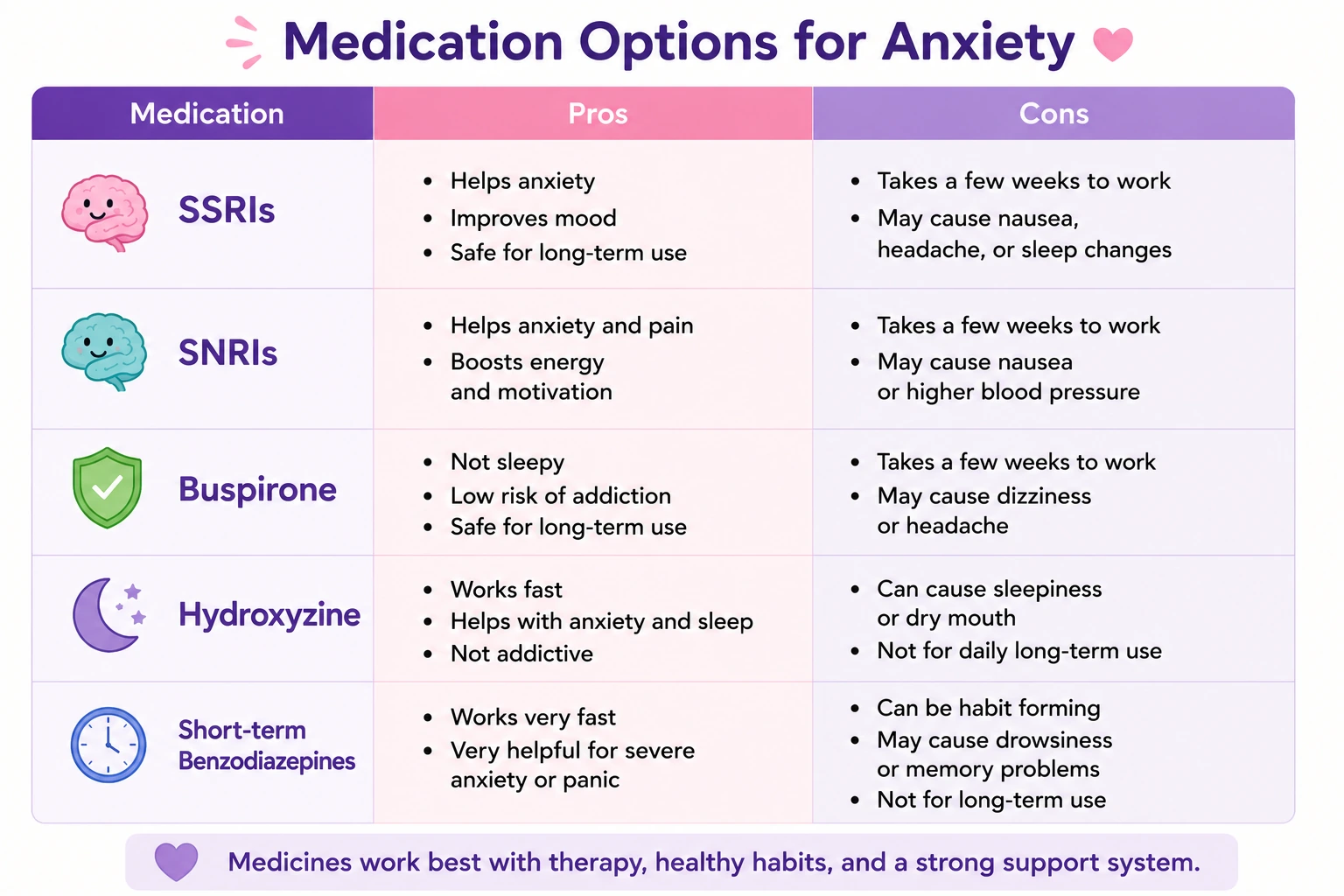
For women whose symptoms are more severe, medications may also be appropriate. Common options include selective serotonin reuptake inhibitors (SSRIs), serotonin-norepinephrine reuptake inhibitors (SNRIs), buspirone, hydroxyzine, and, in carefully selected situations, short-term benzodiazepines. Each medication has its own benefits and potential drawbacks, and treatment should always be individualized based on the patient’s symptoms, medical history, and preferences.
Many women also wonder whether hormone therapy can help. The answer is yes—but with important caveats. Hormone therapy is not considered a primary treatment for generalized anxiety disorder. However, it can significantly improve anxiety that is directly related to the menopause transition, particularly when anxiety occurs alongside hot flashes, night sweats, and sleep disruption. By stabilizing hormone fluctuations, estrogen therapy may improve sleep, reduce vasomotor symptoms, enhance serotonin and dopamine signaling, reduce activation of the body’s stress response, and ultimately improve overall quality of life.
Progesterone may also contribute. Oral micronized progesterone is converted into allopregnanolone within the brain, enhancing GABA activity and promoting relaxation. Many women report better sleep, fewer nighttime awakenings, reduced racing thoughts, and less nighttime anxiety while taking oral micronized progesterone, although responses do vary between individuals.
Current menopause guidelines do not recommend hormone therapy solely to treat anxiety. However, they recognize that hormone therapy can improve mood and anxiety when these symptoms occur as part of the menopause transition, particularly in women experiencing bothersome hot flashes and night sweats. The strongest evidence exists for healthy women younger than 60 years of age or within 10 years of menopause who have no contraindications to hormone therapy. Nevertheless, treatment decisions should always be individualized through a thoughtful discussion of risks and benefits rather than based on age alone.
The scientific evidence supporting this approach continues to grow. In a 2022 randomized trial by Lozza-Fiacco and colleagues, transdermal estradiol reduced anxiety symptoms and loss of pleasure in perimenopausal women, with the greatest benefit seen in women whose mood appeared particularly sensitive to hormonal fluctuations. Gleason and colleagues demonstrated in 2015 that oral conjugated estrogen produced modest improvements in anxiety and depressive symptoms among postmenopausal women compared with placebo, while transdermal estradiol showed less consistent benefit. In another 2015 study, Caan and colleagues compared low-dose oral estradiol with venlafaxine and placebo in women experiencing bothersome hot flashes. Although the study was not designed specifically to treat anxiety disorders, estradiol improved menopause-related quality of life and several emotional symptoms, supporting the concept that reducing hot flashes and improving sleep can indirectly reduce anxiety.
Of course, hormones are not always the cause of anxiety. Any anxiety accompanied by severe depression, mania, psychosis, suicidal thoughts, panic disorders that predated menopause, hyperthyroidism, substance misuse, or other concerning neurological or medical symptoms deserves prompt medical evaluation to rule out other underlying conditions.
The most important message I hope every woman takes away is this: perimenopause doesn’t create weakness—it changes the chemistry of the brain. If you’ve suddenly developed anxiety, panic attacks, nighttime awakenings, or a constant sense that something just isn’t right, don’t dismiss your symptoms as “just stress.” Sometimes anxiety isn’t simply psychological. Sometimes it’s hormonal.
The good news is that you don’t have to suffer through it. Lifestyle changes, cognitive behavioral therapy, medications, and—in carefully selected women—hormone therapy can all play an important role in helping you feel like yourself again.
References:
Avis NE, Crawford SL, Green R. Vasomotor symptoms across the menopause transition: differences among women. Obstet Gynecol Clin North Am. 2018;45(4):629-640. doi:10.1016/j.ogc.2018.07.005
Bromberger JT, Schott LL, Kravitz HM, et al. Longitudinal change in reproductive hormones and depressive symptoms across the menopausal transition: results from the Study of Women’s Health Across the Nation (SWAN). Arch Gen Psychiatry. 2010;67(6):598-607. doi:10.1001/archgenpsychiatry.2010.55
Freeman EW, Sammel MD, Liu L, Gracia CR, Nelson DB, Hollander L. Hormones and menopausal status as predictors of depression in women in transition to menopause. Arch Gen Psychiatry. 2004;61(1):62-70. doi:10.1001/archpsyc.61.1.62
Freeman EW. Associations of depression with the transition to menopause. Menopause. 2010;17(4):823-827. doi:10.1097/gme.0b013e3181db7df0
Gordon JL, Rubinow DR, Eisenlohr-Moul TA, et al. Efficacy of transdermal estradiol and micronized progesterone for the prevention of depressive symptoms in the menopause transition: a randomized clinical trial. JAMA Psychiatry. 2018;75(2):149-157. doi:10.1001/jamapsychiatry.2017.3998
Maki PM, Kornstein SG, Joffe H, et al. Guidelines for the evaluation and treatment of perimenopausal depression: summary and recommendations. Menopause. 2018;25(10):1069-1085. doi:10.1097/GME.0000000000001174
North American Menopause Society. The 2022 hormone therapy position statement of The North American Menopause Society. Menopause. 2022;29(7):767-794. doi:10.1097/GME.0000000000002028
Soares CN. Depression and menopause: an update on current knowledge and clinical management for this critical window. Med Clin North Am. 2019;103(4):651-667. doi:10.1016/j.mcna.2019.02.008
Soares CN, Zitek B. Reproductive hormone sensitivity and risk for depression across the female life cycle: a continuum of vulnerability? J Psychiatry Neurosci. 2008;33(4):331-343.
The Menopause Society. The 2023 Nonhormone Therapy Position Statement of The Menopause Society. Menopause. 2023;30(6):573-590. doi:10.1097/GME.0000000000002200
The Menopause Society. The 2024 Menopause Practice: A Clinician’s Guide. 7th ed. Mayfield Heights, OH: The Menopause Society; 2024.