

How Strong Is the Evidence Between Obesity and Alzheimer’s Disease?
While obesity has been associated with an increased risk of Alzheimer disease (AD), the causal nature of this relationship is often misconstrued by the popular media. There are multiple plausible biological mechanisms by which obesity may drive and worsen AD risk, but the magnitude of its impact is frequently overstated. Most evidence suggests that body mass during midlife, not later in life, confers an increased risk, and the independent contribution of obesity is small compared with other potentially modifiable factors.
There is an extensive literature on the association between obesity and dementia. Most studies find that obesity during approximately 40 to 65 years of age increases the future risk of various forms of dementia. A meta-analysis by Albanese et al found that midlife obesity was associated with a 64% higher risk of any dementia. Similarly, pooled analysis found a 60% higher risk for Alzheimer disease specifically. Thus, obesity does not appear to double the risk of dementia, as is sometimes reported in the popular media. The key message is that obesity during midlife was associated with a large increase in future dementia risk. Obesity was not an independent risk factor in the ARIC study: the major risk factors were APOE ε4, diabetes, and hypertension. Nevertheless, obesity often causes secondary risk factors such as diabetes, hypertension, vascular injury, and sleep-disordered breathing that may contribute to dementia, and midlife obesity was independently associated with increased dementia risk in ARIC. The 2024 Lancet Commission on dementia noted obesity as one of 14 potentially modifiable risk factors for dementia. Taken together, these 14 factors may account for nearly half of all dementia cases worldwide, although obesity’s population attributable fraction was small (1%-2%). It is not that obesity has only a small biological effect; population attributable fractions should be interpreted cautiously because these are overlapping risk factors that share causal pathways. Obesity may also contribute to other factors’ effects on dementia, such as hypertension and diabetes.
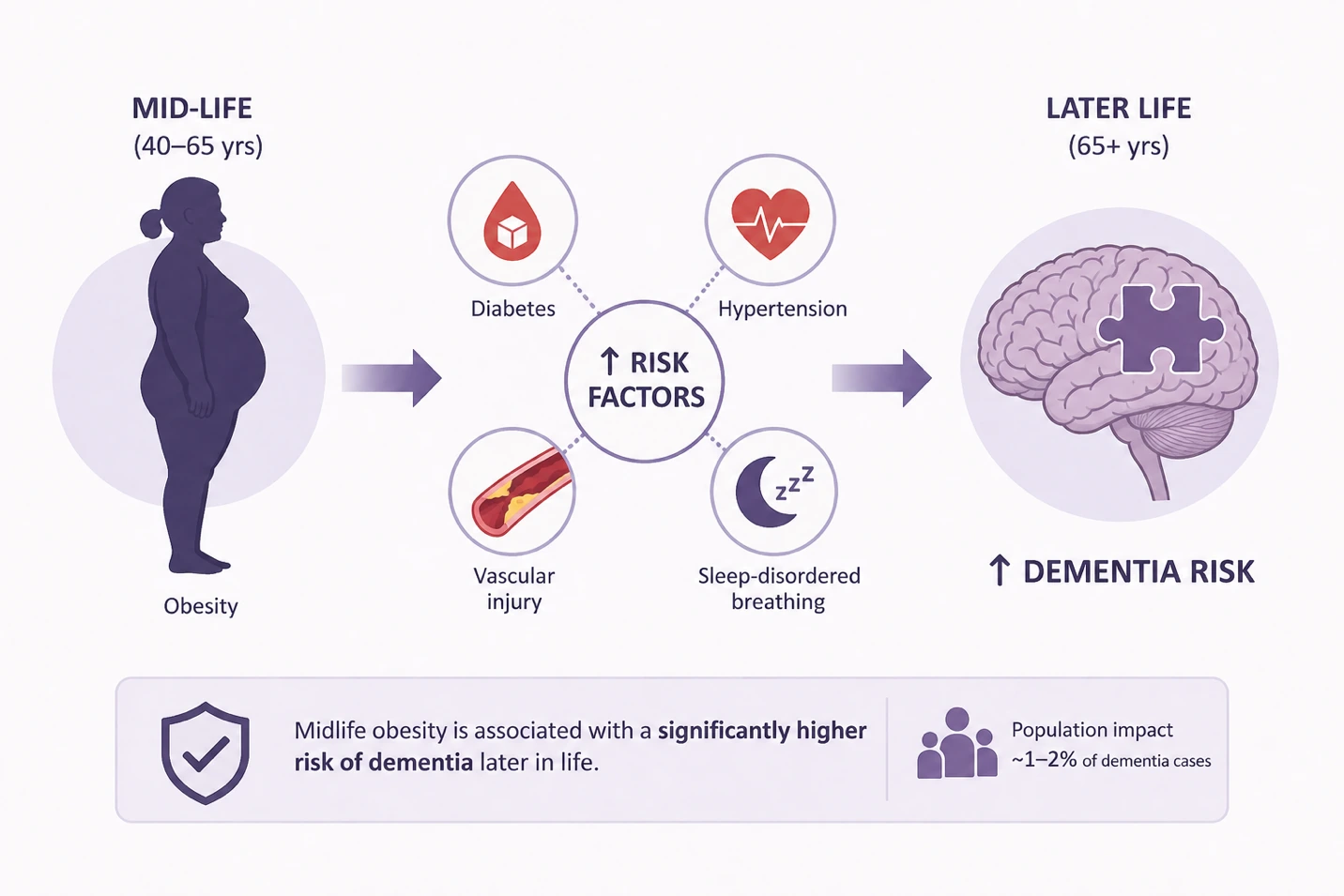
It is notable that small studies of brain tissue from persons who died from morbid obesity have found evidence of Alzheimer-type pathologic changes, including amyloid and tau accumulation. However, these studies were small and could not establish causality. Nonetheless, human epidemiologic evidence is consistent with midlife obesity as a risk factor for later dementia. Less consistent is the role of obesity as a risk factor independent of other factors such as diabetes and hypertension. It remains challenging to disentangle the role of different vascular risk factors in dementia etiology.
What Did the 2026 Yang et al Study Find?
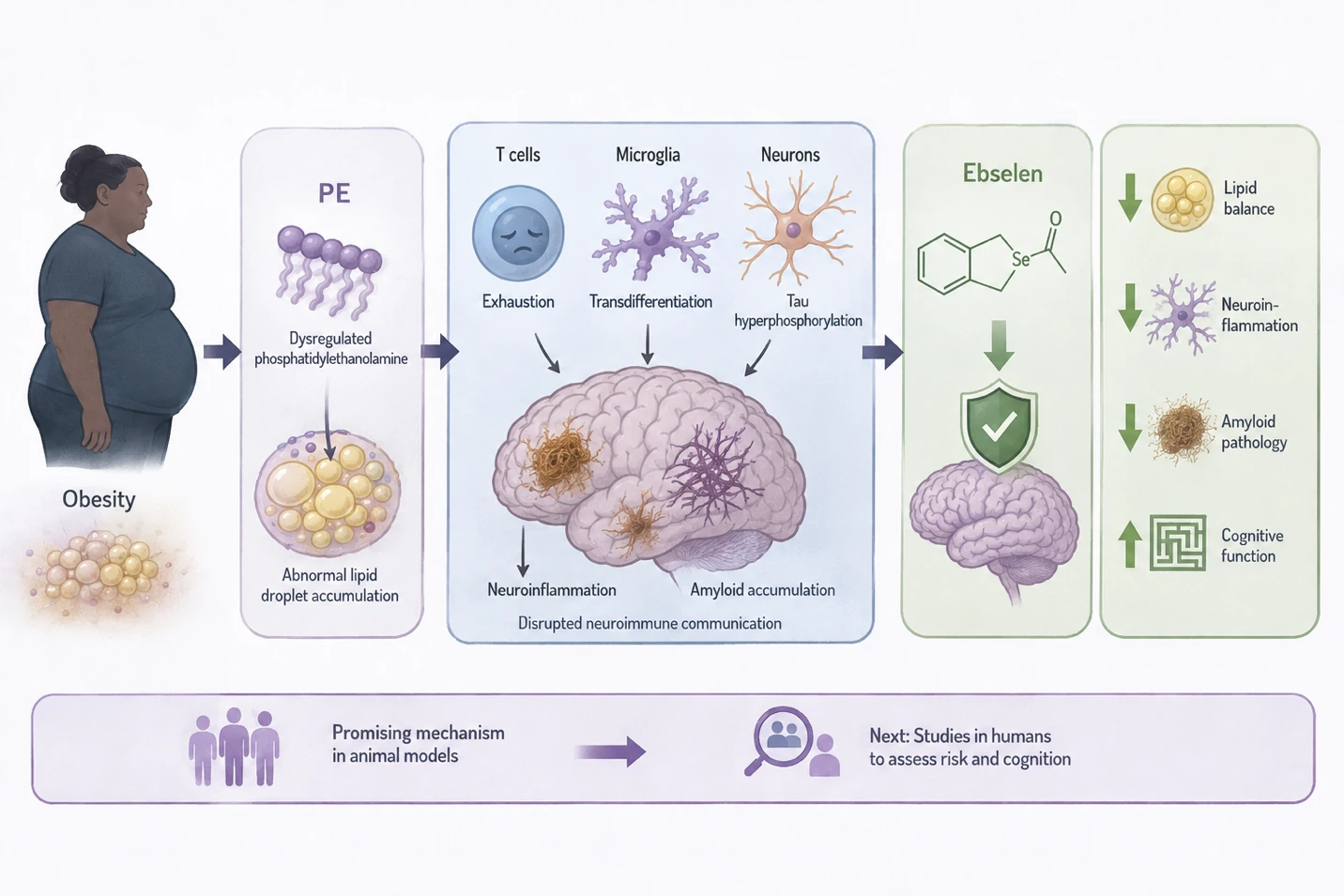
The April 2026 article by Yang et al in Molecular Neurodegeneration provides a possible mechanistic link between obesity-related lipid abnormalities and Alzheimer disease. The study uses an impressive array of techniques, including quantitative lipidomics, single-nucleus RNA-sequencing, proteomics, and high-resolution imaging, to identify dysregulated metabolic processes. It then examines the consequences of these metabolic alterations for neuroinflammation and amyloid processing in mouse models of Alzheimer disease and tests the effects of treating mice with ebselen, a drug that decreases oxidative stress.
The study’s findings add credence to the hypothesis that dysregulated lipid metabolism, specifically phosphatidylethanolamine (PE), plays a pivotal role in the relationship between obesity and Alzheimer disease. PE is a ubiquitous phospholipid that is densely packed with polyunsaturated fatty acids. It plays crucial roles in cell membrane formation, mitochondrial membrane structure and function, and cellular signaling. The investigators found that PE levels were dysregulated in metabolically obese mice. Dysregulated levels of PE were linked to abnormal lipid droplet formation in the brain, which disrupted membrane homeostasis and had detrimental effects on neuroinflammation, neuronal function, and amyloid processing.
Notably, T cells exhibited signs of exhaustion, microglia displayed transdifferentiation, and excitatory neurons underwent hyperphosphorylation of tau, suggesting that dysregulated lipid metabolism disrupts the membranes of multiple cell types and leads to downstream effects. According to the researchers, abnormal PE metabolism disrupts neuroimmune communication.
The authors tested the effects of ebselen, a redox active compound with antioxidant properties, on Alzheimer mice with dysregulated PE metabolism, finding that it decreased lipid dysregulation, improved neuroinflammation, and enhanced cognitive function.
The clinical significance of this work is difficult to overestimate because it helps explain how obesity-related dysregulated lipid metabolism may promote neuroinflammation and worsen Alzheimer pathology. The study demonstrates that a specific aspect of lipid dysregulation, PE dysregulation, influences multiple downstream processes. This work has opened up exciting new avenues of research into the interactions between obesity and Alzheimer disease.
Nevertheless, this was predominantly a basic science study that investigated these issues in animal models. While the findings may help guide future research, they do not have immediate clinical implications for persons with obesity or Alzheimer disease. There is currently no compelling evidence that ebselen is an effective treatment for obesity-related Alzheimer disease, and such a claim would require extensive additional study before it could be substantiated.
The next step in this line of research will be to investigate the role of dysregulated PE metabolism in human cognition. Researchers will be interested in determining whether dysregulated PE metabolism is associated with increased Alzheimer risk, decreases in cognitive performance, or alterations in Alzheimer biomarkers.
Why Does Obesity Matter More if It Occurs in Midlife vs Later Life?
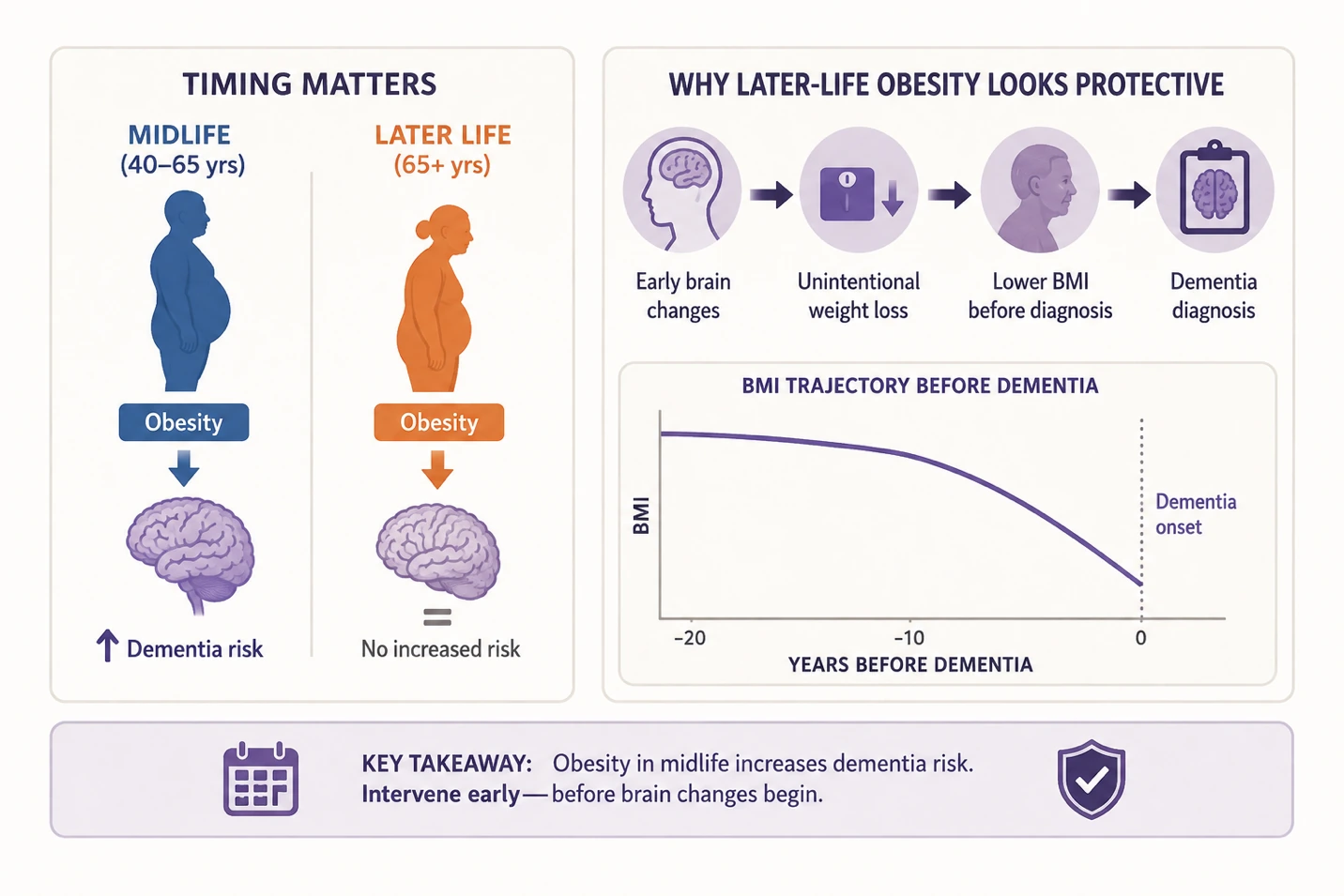
Some studies have described an paradoxical association between body mass index (BMI) and dementia in which obese older adults have a decreased subsequent risk of dementia. This observation does not mean that obesity is protective for the aging brain. Several longitudinal studies have shown that older adults begin to lose weight in the years preceding dementia diagnosis. It is not unusual for patients to exhibit declines in taste, smell, memory, motivation, food preparation, and executive function that lead to unintentional weight loss prior to formal diagnosis of dementia. A 28-year longitudinal study found that obesity predicted dementia, but BMI began to decline during the decade prior to dementia onset.
Other studies found that obesity during midlife predicted increased risk whereas later-in-life obesity was associated with a lower risk. This is consistent with reverse causation; that is, weight loss due to predementia neurobiology makes older adults less likely to be obese shortly before dementia diagnosis. This observation has important implications for intervention. Lifestyle modification during midlife may still be effective, even if obesity in very old age is not an important risk factor.
What Biological Mechanisms Might Link Obesity to Alzheimer Disease?
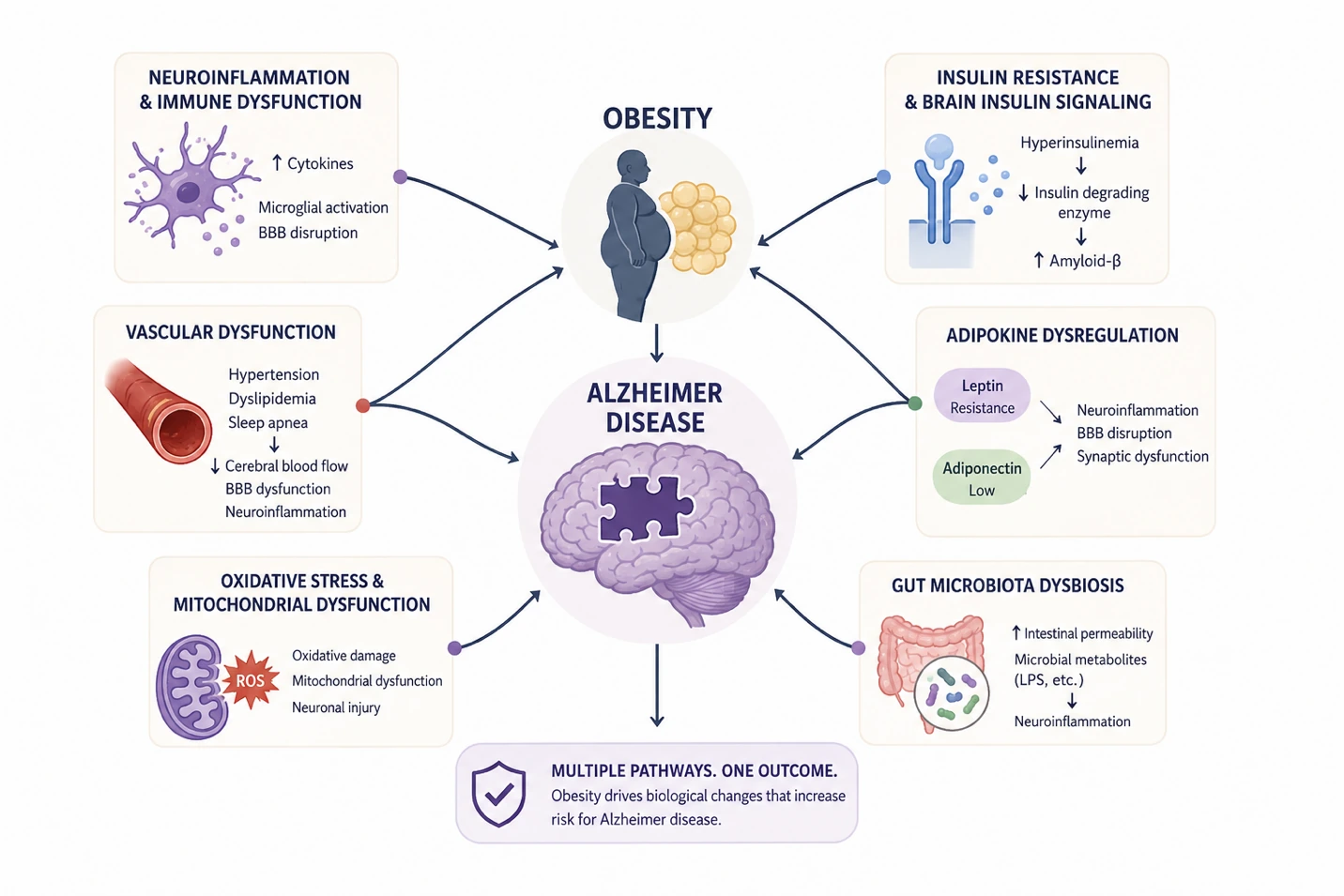
Obesity may drive and worsen AD through multiple interacting biological processes, including neuroinflammation, vascular dysfunction, insulin resistance, alterations in leptin and adiponectin, oxidative stress, and abnormalities in the gut microbiome.”
Neuroinflammation and immune dysfunction
Visceral fat is metabolically active and generates inflammatory cytokines, including interleukin-6, interleukin-1β, and tumor necrosis factor-α, among others. These factors may disrupt the blood-brain barrier and promote microglial activation, which can damage synapses and neurons. It has been proposed that microglia are functionally divided into proinflammatory and neuroprotective domains; thus, dysregulation may lead to a state of chronic, inappropriate proinflammatory activation that damages neurons and promotes amyloid deposition.
Insulin resistance and dysfunction in brain insulin signaling
Brain insulin receptors are widely distributed, and insulin plays a role in regulating synaptic plasticity and cognitive function, in addition to its well-established endocrine functions. Obesity-induced insulin resistance may disrupt these processes and promote amyloid accumulation. One proposed mechanism involves the dysregulation of insulin degrading enzyme, which is responsible for the clearance of amyloid-β, among other peptides. Hyperinsulinemia may drive this process, decreasing the enzyme’s affinity for amyloid-β.
The link between diabetes and dementia is well-established, and diabetes may be a mediator of obesity’s effects on the brain. In the ARIC study, for example, midlife diabetes was associated with nearly double the subsequent risk of dementia. It is essential to note that diabetes was an independent risk factor, but obesity was a risk factor for developing diabetes. Hyperinsulinemia, a component of insulin resistance, may disrupt multiple neurobiological processes, promoting dementia through complex mechanisms.
Vascular dysfunction
Obesity is a major contributor to vascular dysfunction, including hypertension, diabetes, dyslipidemia, and obstructive sleep apnea. These conditions impair cerebral blood flow and contribute to blood-brain barrier dysfunction and neuroinflammation. Vascular dysfunction is a critical modifier of amyloid accumulation and is frequently found in combination with Alzheimer disease pathology. A person who develops amyloid accumulation and neurofibrillary lesions may remain cognitively normal for many years, but subsequent vascular injury may precipitate dementia. Obesity may increase the risk of dementia by accelerating the transition from normal cognition to dementia after amyloid positivity.
Dysfunction of adipokines, including leptin and adiponectin
Leptin is a key hormone that regulates appetite and energy expenditure, but it also influences hippocampal function and mood. Leptin deficiency is linked to increased Alzheimer risk, whereas leptin resistance is common in obesity. Leptin and other adipokines such as adiponectin may promote neuroinflammation, disrupt the blood-brain barrier, and impair synaptic plasticity when dysregulated.
Oxidative stress and mitochondrial dysfunction
Obesity may promote mitochondrial dysfunction and oxidative stress via multiple mechanisms, including inflammation, insulin resistance, and dysregulation of adipokines. Mitochondrial dysfunction and oxidative stress contribute to neuronal damage and are linked to Alzheimer disease pathogenesis. The brain is particularly vulnerable to oxidative stress due to its high energy demands and the abundance of oxidation-sensitive lipids in neuronal membranes.
Gut microbiota and metabolic endotoxemia
Obesity is frequently linked to gut microbiome dysbiosis. Increased intestinal permeability allows bacterial metabolites such as lipopolysaccharides to enter the systemic circulation, where they may promote neuroinflammation. Microbial metabolites influence multiple physiological processes, including neuroinflammation and neurotransmission, and dysbiosis has been linked to a plethora of medical conditions. The relationship between gut microbiota and Alzheimer disease is still being unraveled, and it is unclear which bacterial metabolites influence cognition or contribute to Alzheimer pathology.
Could improving metabolic health reduce Alzheimer’s risk, and what do we know so far?
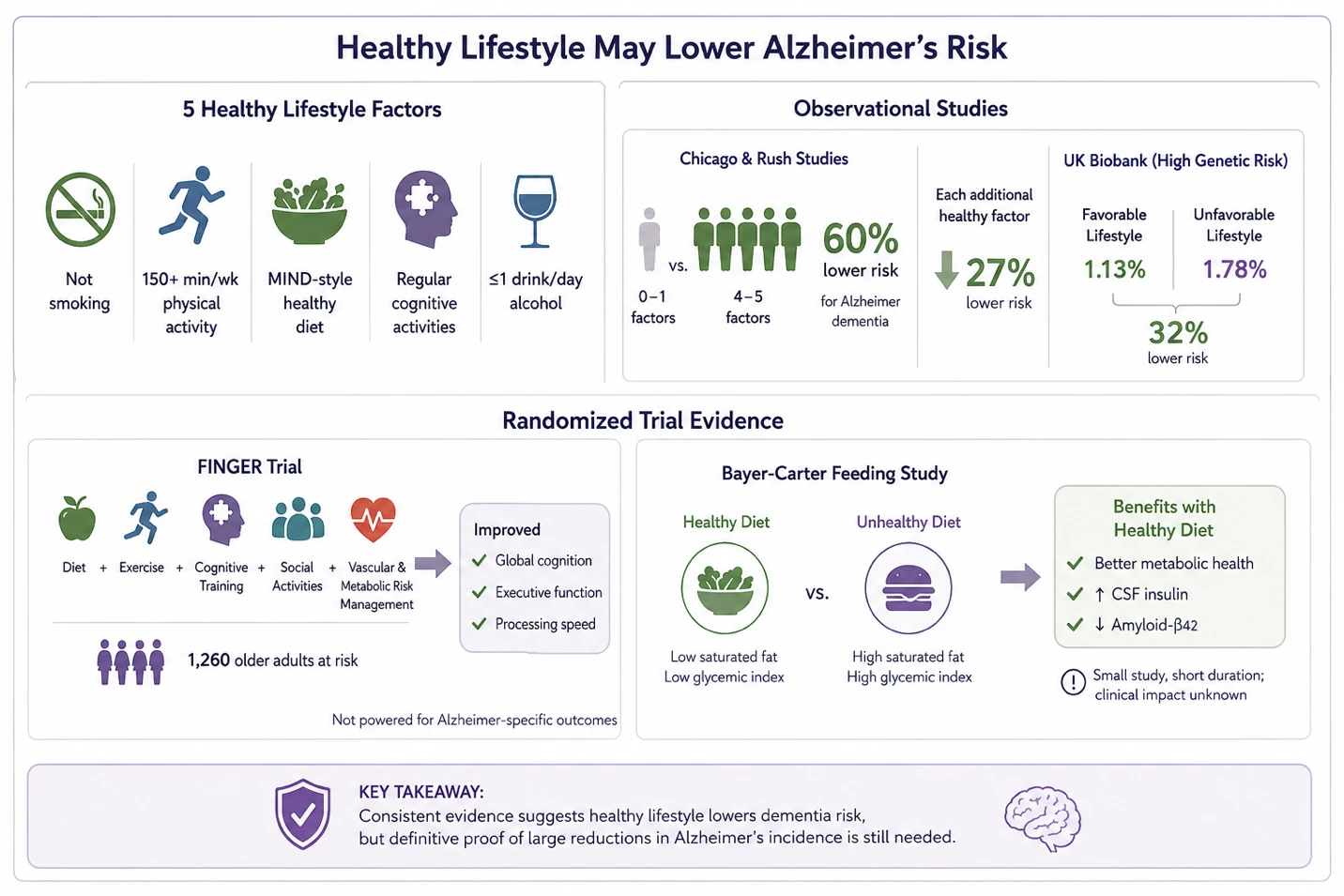
There is evidence from observational studies that healthy lifestyle changes can reduce the risk of developing Alzheimer disease, but it is not known if these interventions substantially lower the incidence. Two large observational studies, the Chicago Health and Aging Project and Rush Memory and Aging Project examined the impact of 5 healthy lifestyle factors on the development of Alzheimer disease. The factors included not smoking, engaging in at least 150 minutes of moderate-to vigorous physical activity per week, eating a healthy MIND-style diet, participating in regular cognitive activities, and limiting alcohol consumption to 1 or fewer drinks per day.
These studies found that compared to persons following 0 or 1 healthy lifestyle factors, those following 4 or 5 had a 60% lower risk for developing Alzheimer dementia. In addition, each successive healthy lifestyle factor was associated with roughly a 27% lower relative risk for developing Alzheimer dementia.
A similar association was found in a UK Biobank analysis of 196,383 adults who were followed for a median of 8 years. For adults with high genetic risk, the incidence of dementia was 1.13% for those who followed a favorable lifestyle compared with 1.78% for those who followed an unfavorable lifestyle. This corresponded to a 32% lower relative risk for those with high genetic risk following a favorable lifestyle. These findings are consistent with the hypothesis that adherence to a healthy lifestyle is associated with a lower risk for dementia, but they are limited by the observational design. One explanation for a favorable lifestyle is that it reflects some underlying protective biological mechanism in addition to the direct effects of exercise, diet, and other healthy behaviors.
Randomized trials can provide stronger evidence for a causal association. The Finnish Geriatric Intervention Study to Prevent Cognitive Impairment and Disability (FINGER) evaluated a multidomain intervention in 1260 older adults at increased risk for cognitive decline. Participants were randomized to receive either general health advice or a comprehensive intervention that combined dietary counseling, physical activity, cognitive training, social activities, and intensive management of vascular and metabolic risk factors. The intervention led to consistent improvements in global cognition, executive function, and processing speed, but it was not designed to evaluate the effect on Alzheimer-specific outcomes.
A smaller randomized feeding study by Bayer-Carter and colleagues compared the effects of a high-saturated fatty acid, high-glycemic-index diet with those of a low-saturated fatty acid, low-glycemic-index diet on older adults with and without amnestic mild cognitive impairment. The healthier diet was associated with multiple metabolic improvements and changes in cerebrospinal fluid biomarkers, including increases in insulin and decreases in amyloid-β42, which may be beneficial. However, this study was limited by its small sample size and short duration to assess whether these changes translated into clinically meaningful differences.
What Are the Biggest Unanswered Questions?
What About Weight Loss Medications or Surgery?
There is increasing interest in the potential for weight loss medications and bariatric surgery to reduce the risk of dementia. Some observational studies find that bariatric surgery is associated with a decreased risk of dementia. It is also notable that obesity-linked alterations in brain “biological age” appear to partially reverse after major weight loss due to bariatric surgery, as determined by neuroimaging studies. Nevertheless, these studies are limited by potential confounding and selection bias.
The effects of weight loss drugs such as glucagon-like peptide 1 (GLP1) receptor agonists on Alzheimer disease are also of great interest. The mechanism by which these drugs may influence cognition is not fully understood and likely involves multiple processes, such as decreasing inflammation, improving glycemic control, and influencing neural circuits that regulate appetite and mood.
Does obesity directly cause Alzheimer’s disease?
Obesity may directly alter brain biology, but it may also act primarily through diabetes, hypertension, dyslipidemia, vascular injury, sleep apnea and physical inactivity. These pathways overlap so extensively that separating their individual contributions is difficult.
Mendelian-randomization studies and long-term biomarker studies may help clarify causality, but they also have assumptions and limitations. Ultimately, randomized intervention studies beginning in midlife would offer the strongest evidence.
Can intentional weight loss prevent Alzheimer’s disease?
It is not yet known whether losing a specific percentage of body weight reduces the incidence of Alzheimer’s disease. It is also unclear whether the method of weight loss matters or whether improvement in visceral fat, insulin sensitivity, blood pressure and fitness is more important than weight alone.
When is intervention most effective?
Midlife appears to be a critical window, but the optimal starting age has not been established. Prevention trials may need decades of follow-up, making them difficult and expensive. Researchers also need to determine whether metabolic intervention remains beneficial after amyloid or tau biomarkers become abnormal but before cognitive symptoms develop.
Is visceral fat more important than BMI?
BMI cannot distinguish visceral fat from subcutaneous fat or lean muscle. Visceral adiposity, waist circumference, liver fat and insulin resistance may predict neurodegenerative risk better than BMI alone.
Future studies should incorporate direct imaging of visceral fat, metabolic biomarkers and longitudinal amyloid and tau measurements rather than relying solely on body weight.
Will the PE pathway translate to humans?
The Yang et al. findings need replication in human cohorts. Investigators will need to establish normal and abnormal PE patterns, determine whether circulating PE reflects brain PE biology and test whether modifying PE metabolism improves clinically meaningful outcomes without disrupting essential cellular membranes.
Are there important sex differences?
Women develop Alzheimer’s disease more frequently than men, largely because women live longer, but sex hormones, menopause timing, body-fat distribution and APOE biology may also influence risk. The suggestion that estrogen protects women with obesity more than men remains unproven. Menopause is accompanied by increased visceral fat and worsening insulin resistance in many women, which could alter the relationship between obesity and brain aging. Future studies need to examine sex, menopausal status, hormone exposure and adipose distribution rather than adjusting for sex as a simple demographic variable.
Who benefits most from intervention?
Risk is unlikely to be uniform. APOE ε4 carriers, people with diabetes, individuals with visceral obesity, those with sleep apnea and people with evidence of early amyloid or tau accumulation may respond differently to lifestyle, medication or surgical interventions. Precision-prevention trials will be needed to identify which metabolic targets are most important for each phenotype.
Bottom Line
The strongest evidence links obesity during midlife—not necessarily obesity measured shortly before dementia diagnosis—to an increased risk of later cognitive decline and dementia. Meta-analyses suggest that midlife obesity is associated with approximately a 60% to 64% higher relative risk, rather than a uniform doubling of risk.
Obesity may influence Alzheimer’s disease through insulin resistance, vascular injury, chronic inflammation, adipokine dysfunction, oxidative stress, altered gut-brain signaling and abnormal lipid metabolism. The 2026 study by Yang and colleagues adds an important new mechanism by showing that obesity-associated phosphatidylethanolamine dysregulation can disrupt immune-neuronal communication and accelerate Alzheimer-like pathology in mouse models.
The practical message is not that every person with obesity will develop Alzheimer’s disease, nor that weight loss has been definitively proven to prevent it. Rather, brain health and metabolic health are deeply interconnected. Addressing obesity, diabetes, hypertension, inactivity, smoking, sleep apnea and poor diet during midlife represents one of the most biologically plausible and clinically valuable strategies available for reducing long-term dementia vulnerability.
References
Albanese E, Launer LJ, Egger M, et al. Body mass index in midlife and dementia: systematic review and meta-regression analysis of 589,649 men and women followed in longitudinal studies. Alzheimers Dement (Amst). 2017;8:165-178. doi:10.1016/j.dadm.2017.05.007.
Bayer-Carter JL, Green PS, Montine TJ, et al. Diet intervention and cerebrospinal fluid biomarkers in amnestic mild cognitive impairment. Arch Neurol. 2011;68(6):743-752. doi:10.1001/archneurol.2011.125.
Dhana K, Evans DA, Rajan KB, Bennett DA, Morris MC. Healthy lifestyle and the risk of Alzheimer dementia: findings from 2 longitudinal studies. Neurology. 2020;95(4):e374-e383. doi:10.1212/WNL.0000000000009816.
Fitzpatrick AL, Kuller LH, Lopez OL, et al. Midlife and late-life obesity and the risk of dementia: cardiovascular health study. Arch Neurol. 2009;66(3):336-342. doi:10.1001/archneurol.2008.582.
Gottesman RF, Albert MS, Alonso A, et al. Associations between midlife vascular risk factors and 25-year incident dementia in the Atherosclerosis Risk in Communities cohort. JAMA Neurol. 2017;74(10):1246-1254. doi:10.1001/jamaneurol.2017.1658.
Livingston G, Huntley J, Liu KY, et al. Dementia prevention, intervention, and care: 2024 report of the Lancet standing Commission. Lancet. 2024;404(10452):572-628. doi:10.1016/S0140-6736(24)01296-0.
Lourida I, Hannon E, Littlejohns TJ, et al. Association of lifestyle and genetic risk with incidence of dementia. JAMA. 2019;322(5):430-437. doi:10.1001/jama.2019.9879.
Mrak RE. Alzheimer-type neuropathological changes in morbidly obese individuals. Clin Neuropathol. 2009;28(1):40-45. doi:10.5414/NPP28040.
Ngandu T, Lehtisalo J, Solomon A, et al. A 2-year multidomain intervention of diet, exercise, cognitive training, and vascular-risk monitoring versus control to prevent cognitive decline in at-risk elderly people: the FINGER randomized controlled trial. Lancet. 2015;385(9984):2255-2263. doi:10.1016/S0140-6736(15)60461-5.
Pedditizi E, Peters R, Beckett N. The risk of overweight and obesity in midlife and late life for the development of dementia: a systematic review and meta-analysis of longitudinal studies. Age Ageing. 2016;45(1):14-21. doi:10.1093/ageing/afv151.
Singh-Manoux A, Dugravot A, Shipley M, et al. Obesity trajectories and risk of dementia: 28 years of follow-up in the Whitehall II study. Alzheimers Dement. 2018;14(2):178-186. doi:10.1016/j.jalz.2017.06.2637.
Yang L, Sheng J, Qi S, et al. Obesity-driven phosphatidylethanolamine dysregulation impairs neuroimmune crosstalk and accelerates Alzheimer’s pathogenesis. Mol Neurodegener. 2026;21:25. doi:10.1186/s13024-026-00943-3.