
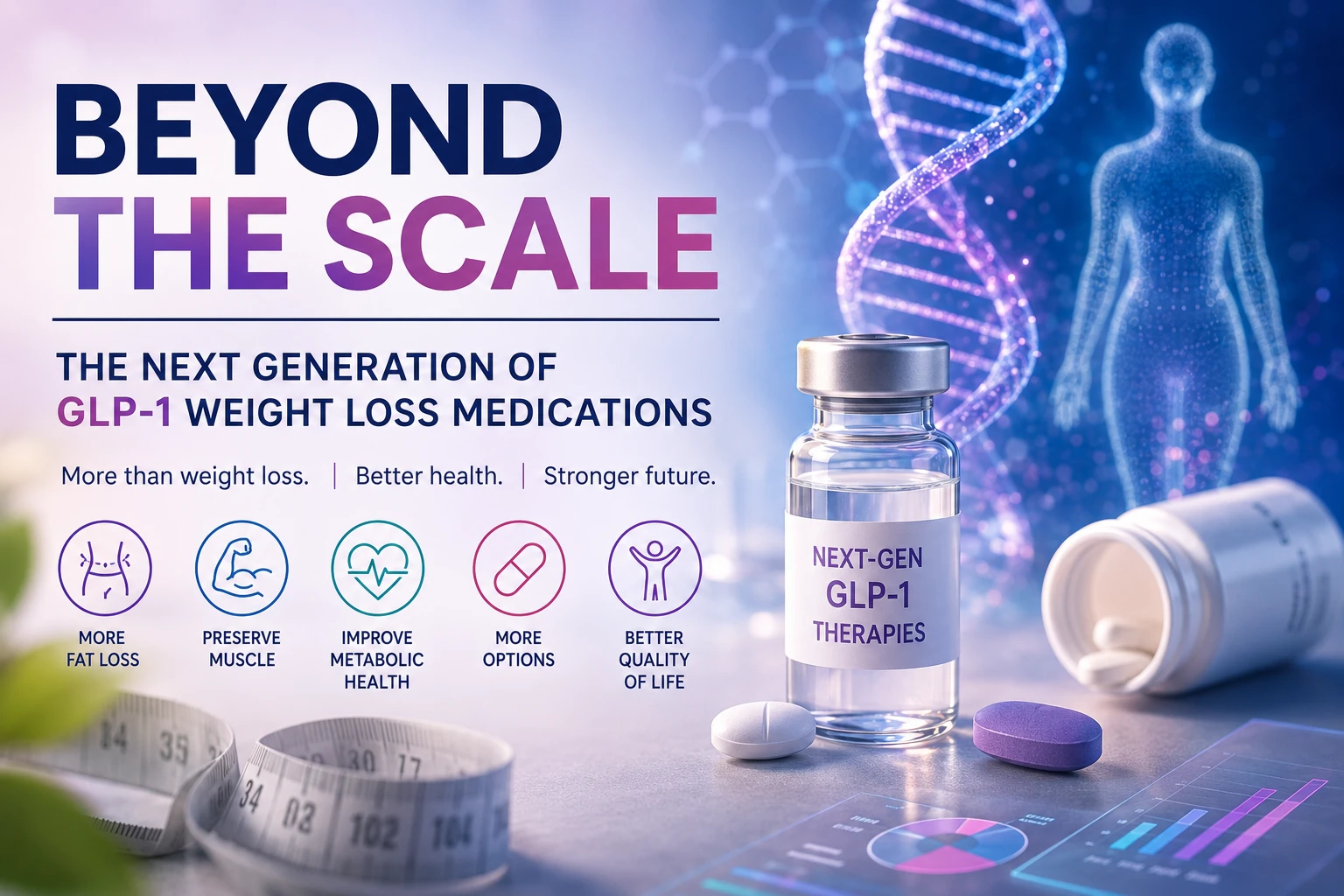
When most people hear the words GLP-1 medication, they immediately think of Ozempic®, Wegovy®, Zepbound®, or Mounjaro®. They think about appetite suppression, weight loss, and a smaller number on the scale.
But obesity medicine is changing rapidly.
The next generation of treatments isn’t just about helping people lose more weight—it’s about helping them lose the right kind of weight while preserving muscle, improving metabolic health, and creating medications that are easier to take and more personalized than ever before.
As a physician specializing in obesity medicine, menopause, and metabolic health, I find this one of the most exciting areas in medicine today. Researchers are asking questions that would have seemed impossible just a few years ago. Can we target multiple hormones instead of just one? Can effective GLP-1 medications come in pill form instead of injections? Can we preserve muscle while people lose fat? Should we stop judging success by the bathroom scale alone?
I believe that last question may be the most important of all.
The Scale Doesn’t Tell the Whole Story
Weight loss has traditionally been measured by one number: pounds lost. But that number doesn’t tell us what the body is losing. Whenever someone loses weight—whether through diet, surgery, exercise, or medication—they lose a combination of fat, water, and lean tissue. Lean tissue includes skeletal muscle, organs, connective tissue, and body water. While losing some lean mass is expected during weight loss, preserving skeletal muscle is incredibly important. Muscle allows us to climb stairs, carry groceries, maintain balance, regulate blood sugar, protect our bones, and remain independent as we age. This becomes even more critical during menopause, when declining estrogen naturally accelerates muscle loss.
In many GLP-1 studies, approximately one-quarter to one-third of the total weight lost has been lean mass. That doesn’t mean GLP-1 medications are “muscle-wasting drugs.” Any successful weight-loss intervention results in some lean tissue loss.
The real question researchers are asking now is much more sophisticated: Can we develop medications that help people lose more fat while preserving more muscle? That single question has sparked an entirely new generation of obesity research.
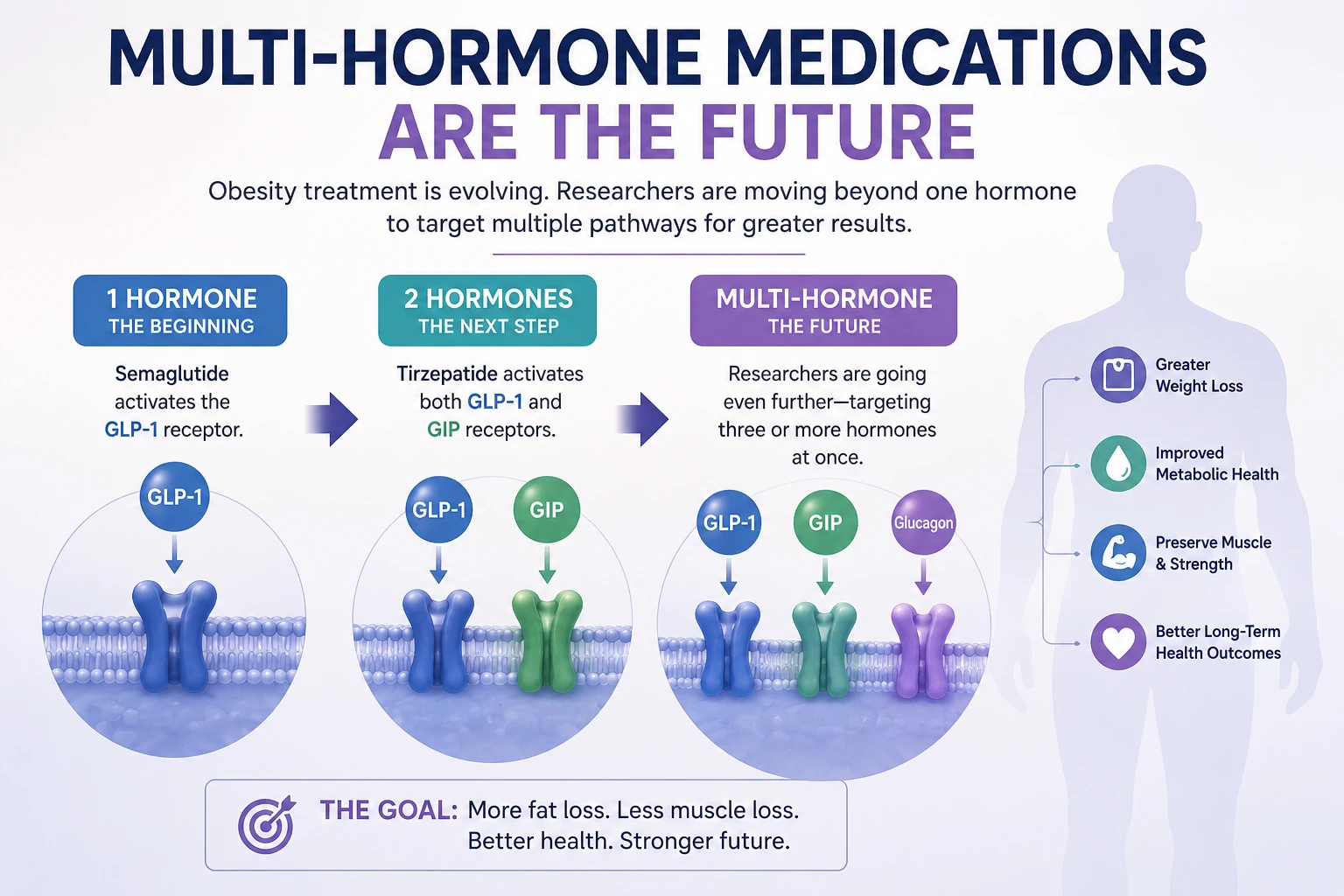
Multi-Hormone Medications Are the Future
The earliest GLP-1 medications targeted one hormone. Semaglutide activates the GLP-1 receptor. Tirzepatide expanded on that concept by activating both GLP-1 and GIP receptors. Now researchers are going even further.
Retatrutide: A Triple Hormone Approach
One of the most exciting investigational medications is retatrutide, which activates three different hormone receptors: GLP-1, GIP, and Glucagon.
In a Phase 2 clinical trial, participants receiving the highest dose lost an average of 24% of their starting body weight in just 48 weeks. For someone weighing 240 pounds, that’s nearly 58 pounds. Researchers believe glucagon contributes by increasing energy expenditure while GLP-1 and GIP reduce appetite and improve glucose regulation.
Although these early results are remarkable, retatrutide remains investigational. We still need long-term safety data, information on muscle preservation, cardiovascular effects, and what happens after patients stop treatment. Bigger weight loss isn’t automatically better if it comes at the expense of nutrition, muscle, or long-term health.
MariTide: Turning GIP Upside Down
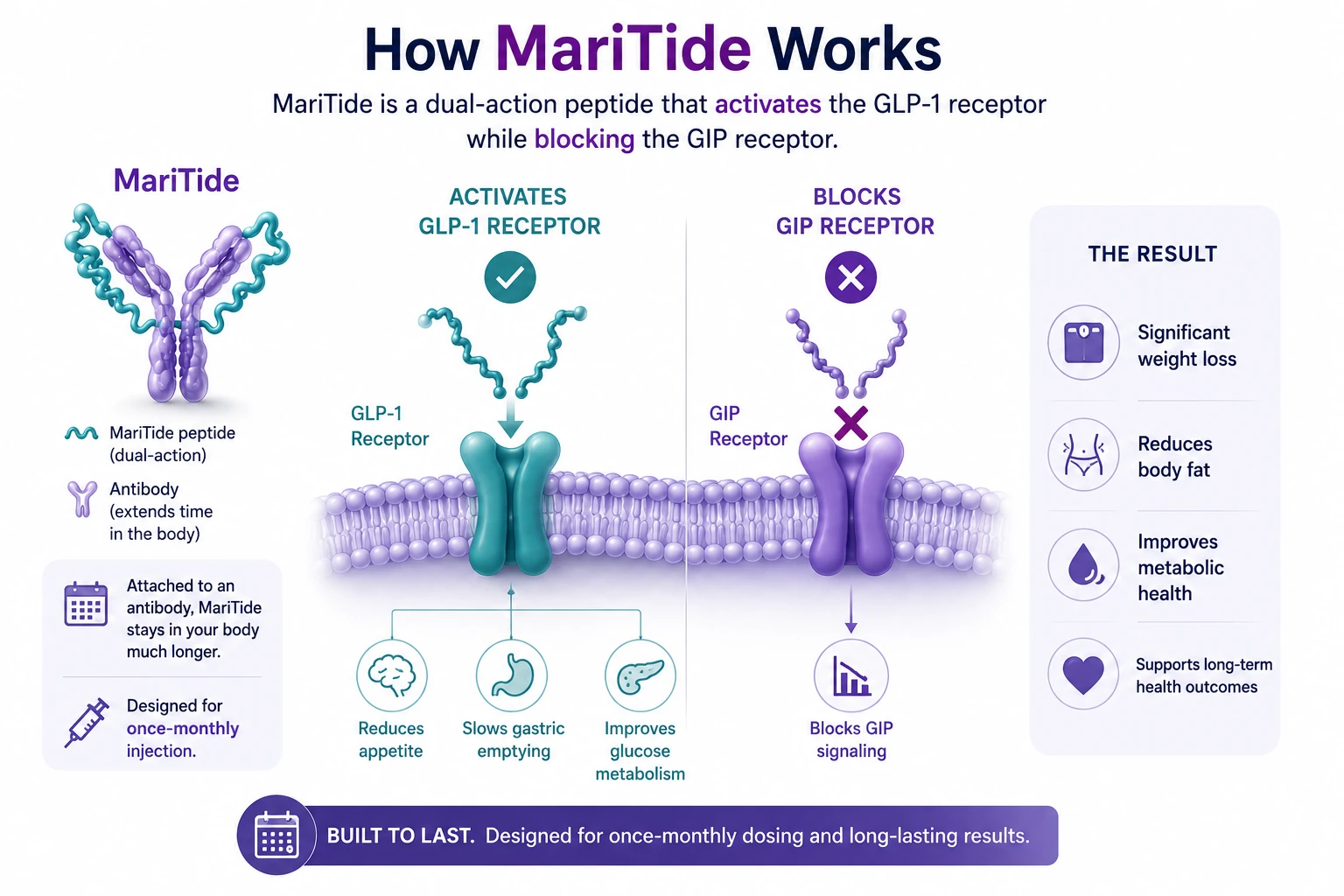
Another fascinating investigational medication is MariTide.
Unlike tirzepatide, which activates both GLP-1 and GIP receptors, MariTide activates GLP-1 while blocking GIP. That surprising approach reminds us how much we still have to learn about hormone biology. MariTide is also designed differently. Because it is attached to an antibody, it stays in the body much longer and can be administered as a once-monthly injection. Early studies have shown weight loss approaching 20% over one year, and many participants had not yet reached a plateau when the study ended. Like every medication, however, effectiveness must be balanced with tolerability. Gastrointestinal side effects remain one of the biggest challenges with these therapies.
CagriSema: Combining GLP-1 with Amylin
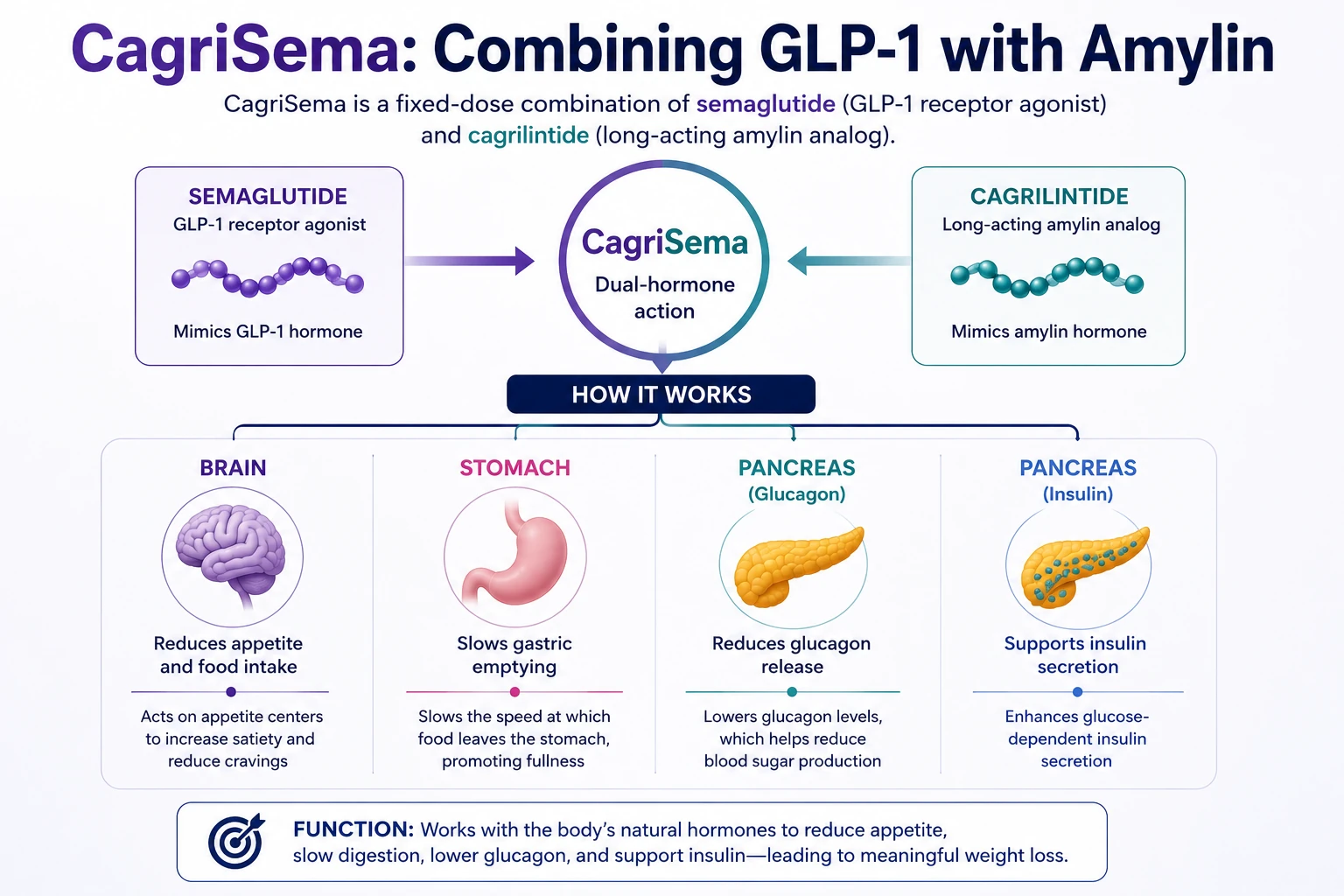
Another promising medication combines semaglutide with cagrilintide, a long-acting version of the hormone amylin. Amylin naturally works alongside insulin to slow stomach emptying, reduce glucagon release, and increase feelings of fullness. Clinical trials have demonstrated approximately 20% weight loss in people without diabetes, with somewhat lower—but still impressive—results among people living with type 2 diabetes. These studies also highlight an important lesson: headline numbers don’t always tell the full story. How researchers analyze participants can significantly influence the reported results.
GLP-1 Pills Are Finally Here
For years, GLP-1 medications required injections because they are peptides that are normally broken down during digestion. That is beginning to change. Orforglipron, approved by the FDA in 2026 under the brand name Foundayo, represents a new class of small-molecule GLP-1 medications taken as a once-daily pill. Unlike oral semaglutide, it does not require complicated fasting instructions before each dose. This may dramatically improve convenience while simplifying manufacturing, shipping, and storage. Some patients will still prefer a weekly injection, but having more options allows treatment to become increasingly individualized.
The Next Frontier: Protecting Muscle
Perhaps the most exciting research isn’t focused on helping patients lose more weight. Instead, it’s focused on helping them lose more fat while preserving muscle. Several investigational medications now target myostatin, a protein that naturally limits muscle growth.
Apitegromab
In the Phase 2 EMBRAZE trial, participants receiving tirzepatide plus apitegromab lost roughly the same amount of weight as those taking tirzepatide alone—but preserved nearly 4 additional pounds of lean mass.
Bimagrumab
Bimagrumab works through a different pathway by blocking activin type II receptors. When combined with semaglutide, approximately 93% of the total weight loss came from fat rather than lean tissue, a remarkable shift in body composition.
These findings suggest the future of obesity treatment may focus less on total pounds lost and more on how much fat versus muscle is being lost.
However, preserving muscle on a scan doesn’t automatically translate into greater strength or better physical function. Researchers will need long-term studies evaluating balance, mobility, falls, grip strength, independence, and overall quality of life before these medications become mainstream.
Body Composition May Become the New Vital Sign
Imagine two patients who each lose 40 pounds. One loses mostly body fat. The other loses a substantial amount of muscle. The scale shows the same result—but medically, those are two very different outcomes. This is why body composition testing is becoming increasingly important.
Methods such as bioelectrical impedance analysis (BIA) and dual-energy X-ray absorptiometry (DXA) provide a more complete picture than body weight alone. Even more importantly, physicians should evaluate functional outcomes such as grip strength, walking speed, stair climbing, chair stands, balance, and quality of life.
After all, the goal isn’t simply to look better on a body composition scan. The goal is to remain strong, active, and independent for decades to come.
What About Bone Health?
Many patients worry that rapid weight loss might increase their risk of osteoporosis. Current evidence is reassuring.
Although weight loss reduces the mechanical load placed on bones—and inadequate protein, calcium, or vitamin D intake can contribute to bone loss—several observational studies have actually associated GLP-1 medications with lower rates of fractures and osteoporosis compared with other weight-loss therapies. These findings are encouraging, but they do not prove that GLP-1 medications protect bone health. More research is still needed.
In the meantime, resistance training, adequate protein intake, sufficient calcium and vitamin D, and appropriate osteoporosis screening remain essential parts of comprehensive obesity care.
Looking Beyond the Scale
The first generation of GLP-1 medications changed the conversation around obesity. They helped demonstrate that obesity is not simply a matter of willpower—it is a complex chronic disease influenced by biology, hormones, and metabolism.
The next generation of treatments promises to be even more sophisticated. We’ll likely see more oral medications, monthly injections, multi-hormone therapies, amylin combinations, and drugs specifically designed to preserve muscle while maximizing fat loss.
But perhaps the biggest shift won’t be the medications themselves. It will be how we define success.
Instead of asking, “How much weight did this patient lose?” we should begin asking a much better set of questions. How much of that weight came from fat? Did they preserve their muscle mass and maintain their strength? Are they healthier, more functional, and better able to perform the activities they enjoy? Can they sustain these improvements over the long term? Most importantly, has treatment improved the quality of the life they are trying to live?
Those questions represent the future of obesity medicine. The goal is no longer simply achieving a lower number on the scale. It’s about improving body composition, protecting muscle, preserving bone health, reducing cardiometabolic risk, and helping patients remain strong, healthy, and independent for years to come. That is what truly defines successful weight management.
References:
Amgen Inc. MariTide™ (maridebart cafraglutide) demonstrated sustained weight loss with monthly or less frequent dosing in adults living with obesity or overweight in a phase 2 study. News release. November 26, 2024.
Aronne LJ, Sattar N, Horn DB, et al. Continued treatment with tirzepatide for maintenance of weight reduction in adults with obesity: the SURMOUNT-4 randomized clinical trial. JAMA. 2024;331(1):38-48. doi:10.1001/jama.2023.24945
Eli Lilly and Company. Retatrutide phase 2 study results in adults with obesity or overweight. News release. June 26, 2023.
Frias JP, Nauck MA, Van J, et al. Efficacy and safety of once-weekly retatrutide in adults with obesity: a phase 2 randomized trial. N Engl J Med. 2023;389(6):514-526. doi:10.1056/NEJMoa2301972
Garvey WT, Frias JP, Jastreboff AM, et al. Cagrilintide plus semaglutide for obesity management in adults without diabetes: results from the REDEFINE 1 trial. Presented at: European Association for the Study of Diabetes Annual Meeting; 2024.
Jastreboff AM, Aronne LJ, Ahmad NN, et al. Tirzepatide once weekly for the treatment of obesity. N Engl J Med. 2022;387(3):205-216. doi:10.1056/NEJMoa2206038
Kapitza C, Frias JP, Dahl D, et al. Oral nonpeptide GLP-1 receptor agonist orforglipron for obesity: phase 3 clinical trial results. Presented at: American Diabetes Association Scientific Sessions; 2025.
Kushner RF, Calanna S, Davies M, et al. Clinical characteristics and body composition changes with semaglutide treatment for obesity in the STEP program. Obesity (Silver Spring). 2023;31(5):1025-1036.
Lau DCW, Erichsen L, Francisco AM, et al. Healthy weight loss maintenance with cagrilintide and semaglutide combination therapy. Lancet Diabetes Endocrinol. 2024;12(6):421-432.
Novo Nordisk. REDEFINE clinical trial program evaluating CagriSema in obesity and type 2 diabetes. Company clinical trial summary. 2024.
Regeneron Pharmaceuticals. Phase 2 EMBRAZE trial evaluating trevogrumab (anti-myostatin) plus tirzepatide in obesity. Company presentation. 2025.
Wepryk R, Heymsfield SB, et al. Bimagrumab with semaglutide improves body composition in adults with obesity: phase 2 BELIEVE trial. Presented at: American Diabetes Association Scientific Sessions; 2025.